
Nalbuphine is a semi-synthetic opioid and one of the most popular painkillers in Ukraine, ranking fourth in pharmacy sales in 2024. Pharmacies sell this opioid even without a prescription, and the Ministry of Health still refuses to tighten control over its circulation. Excessive availability has led to the fact that a medicine designed to relieve pain has become a trap that drags thousands of people into addiction.
The Suspilne investigative editorial office has figured out how nalbuphine became popular in Ukraine and who earns from uncontrolled sales.
Nalbuphine in the army
Nalbuphine was invented in 1965 and first marketed in the United States in 1979. The medicine is a semi-synthetic opioid analgesic used for pain relief and, in some cases, anesthesia. In Ukraine, healthcare institutions began purchasing nalbuphine in the 1990s, but it became popular with the beginning of the war.
In the summer of 2014, a pain relief crisis arose on the front: the opioid analgesic butorphanol, which was in the first-aid kits of the Ukrainian military, became unavailable due to the occupation and destruction of the production in Horlivka, Donetsk region. The military, medics, and volunteers were looking for an alternative. Thus, in August 2014, nalbuphine appeared in the first-aid kits of the Armed Forces of Ukraine.
Saying that this medicine is more effective, the government purchased the first 125,000 doses of the drug in syringe ampoules and distributed them to the military personnel of the Armed Forces of Ukraine.
In 2015, nalbuphine appeared in the National Guards first-aid kits and was included in the list of essential medicines that emergency medical services could use to organize medical and sanitary support for the civilian population during a special period. In 2016, it was included in the first-aid kits of special police units.
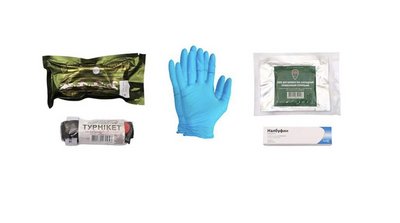
Over time, comments on the negative consequences of nalbuphine use began to emerge. Special rehabilitation programs began to be launched in Ukraine for those with nalbuphine addiction.
In 2017, the Armed Forces officially removed nalbuphine from military first-aid kits. However, the medicine was removed from the National Guards first-aid kits only in 2023. Nevertheless, nalbuphine continues to be uncontrollably spread both on the front and in civilian life.
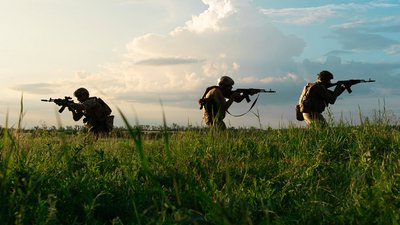
There were cases when the military addicted to nalbuphine stole the drug from their own units. The courts punish the military who abuse the drug while on duty in the same way as for drinking alcoholic beverages, imposing fines of 17,000 hryvnias. Often, the command learns about subordinates’ addiction only when the excessive use leads to loss of consciousness, opioid poisoning, or other serious consequences.
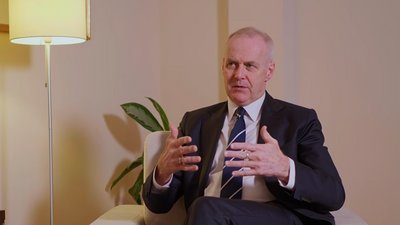
Maksym Pankratov, the head of the battalion medical post in the 67th Separate Mechanized Brigade, believes that using nalbuphine on the battlefield is dangerous, as this drug significantly reduces the reaction and perception of threat. The medic is convinced that soldiers who take the drug pose a risk not only to themselves, but also to those around them.
“Anything can happen on the battlefield. As a rule, the situation with medics on the battlefield is very difficult. And people who are afraid of pain take some medicines with them. As a rule, it is nalbuphine for some reason. It is the most accessible, the most common,” says Maksym Pankratov.

Maksym explains that people may want to use this medicine because it has a sedative effect and changes the perception of pain.
“It rather changes your attitude towards pain. It hurts, but you do not pay attention to it,” says Maksym.
According to the medic, at the beginning of the full-scale invasion, doctors with civilian experience who joined the army used nalbuphine because they had used it in hospitals before. However, what works in civilian medical facilities is not always suitable for the front, where there are no intensive care units and no equipment to monitor the patient’s condition.
Maksym Pankratov notes that nalbuphine creates many problems for combat medics. First, it makes it impossible to use other painkillers for several hours. Second, despite the fact that nalbuphine is considered to be a medicine that does not suppress the respiratory center, in practice it often leads to serious respiratory disorders due to excessive sedation, that is, relaxation of the body.
“There were situations when soldiers simply suffocated because they were injected [with nalbuphine], left alone, and something went wrong. They were not examined in time, they were not checked in time, and they simply suffocated. Every adequate medic tries to fight this problem in his unit,” says Maksym Pankratov.
Electronic warfare operator Volodymyr Kushnir is one of those who suffered from nalbuphine. The man was injured in 2023 during one of the combat missions. When Volodymyr’s condition worsened, a military medic injected him with nalbuphine. In a moment, Volodymyr lost consciousness.
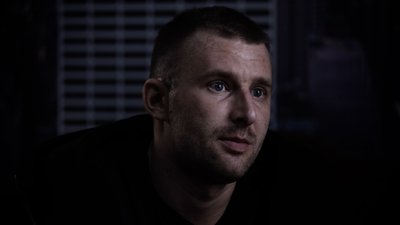
"When I opened my eyes, I was already connected to different medical devices. I spent about two days in the intensive care unit. I was in hospital for three weeks. There were also other consequences, problems with blood pressure. I fell into a coma because of this medicine. They told me that I fell into a coma because my lungs stopped working,” says Volodymyr.
Addiction
The nalbuphine instructions state that with prolonged use, it can cause both physical and psychological dependence, as well as the development of tolerance, which is no different in degree from other morphine derivatives. This means that over time, the body gets used to the drug, and to achieve the same effect, an increase in the dose is required, which increases the risk of abuse and the occurrence of withdrawal syndrome when stopping the drug.
Earlier, manufacturers warned in the instructions that the drug should not be used for more than three days without a doctor’s prescription. Now, there is no such warning.
The Suspilne journalists talked to people who had used nalbuphine for months and even years. One of them is Anton Kucheriavyi, a rifleman of the 3rd separate battalion of the Ukrainian Volunteer Army “Volyn”. In the spring of 2023, he received numerous serious injuries during hostilities in Velyka Novosilka, Donetsk region, underwent 13 surgeries, and had a difficult period of rehabilitation. While in hospital, the man realized that he could not sleep without an injection of painkiller, which the doctors had prescribed for him. In the fourth month of treatment, he learned that this painkiller was nalbuphine.
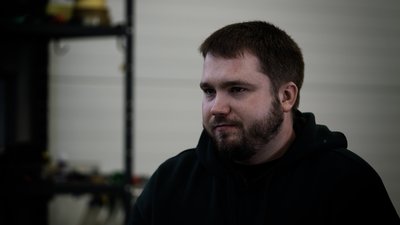
“A nurse told me not to take too much of it because it could be addictive. I think I already had an addiction. I had been living at home for a year, and I was constantly buying it. When I did not inject for a long time, everything seemed to hurt. Nalbuphine makes memory very bad. I almost do not remember the entire period in hospital. I was constantly drowsy. I did not feel any positive effect from it; I just felt the absence of discomfort. All it gave me was the absence of discomfort and the ability to fall asleep. And then I realized that this was a problem,” recalls Anton.
The man says he was buying nalbuphine in pharmacies without a prescription. He could inject up to 10 ampoules per day.
Anton unsuccessfully tried to quit on his own, but the withdrawal syndrome was unbearable, and he went to the pharmacy again and again.
“When I twice tried to quit on my own, I realized that I could not, that I was waiting all night to go to the pharmacy. I just could not fall asleep; I was lying all covered with sweat. I was saying to myself that I would definitely go to the pharmacy. My whole body was aching, and everything annoyed me. I was constantly in a condition as if I was having fever. When I was in bed, I could not lie still even for five minutes, something was constantly bothering me,” says Anton.
In the end, the man agreed with his mother that if he could not quit on his own, she would help him get into a closed-type rehabilitation center. There, after giving up the drug, he suffered from insomnia, hallucinations, and other withdrawal symptoms for a week.
After rehabilitation, Anton’s life has changed dramatically: he feels better and has found a job. The man is sure that he will never return to nalbuphine.
“I wasted almost two years of my life, I remember almost nothing. The only advantage of nalbuphine is that I do not remember that horror, but I do not want to go back to that. Everyone who was in the hospital with me – there were a lot of military there and I still communicate with some of them – just keeps buying it. It is very hard to quit,” says Anton.
Most people addicted to nalbuphine do not admit their problem and hide their use of the drug, says Viktor Nikitchenko, the head of the department at the Vinnytsia Regional Clinical Psychoneurological Hospital. He has been treating military personnel since 2014, but he first encountered cases of nalbuphine addiction in 2022. According to him, sometimes doctors learn about patients’ nalbuphine addiction only when they find empty ampoules or conduct special tests.
“If we take the guys who received serious injuries: multiple, mine-explosive trauma, limb injuries – I understand that in military hospitals, doctors choose the lesser evil because at that stage the wounded need painkillers and, perhaps, it is impossible to do without (nalbuphine – Ed.). However, they later enter the next stages of treatment, and it is a big question whether they have such a pain syndrome. The experience shows that 95% do not have such a pain syndrome,” says Viktor Nikitchenko.
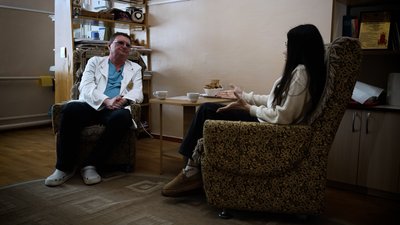
According to the doctor, treating nalbuphine addiction is as difficult as any other addiction to narcotic drugs. Patients with such addiction may be restless, aggressive, refuse to eat, have sleep disorders and hyperhidrosis, that is, excessive sweating. The treatment, according to the doctor, is significantly complicated by the availability of the drug. He is convinced that nalbuphine should be included in the list of narcotic drugs, psychotropic substances, and precursors.
“As one patient, a guy with an amputation of one lower limb, told me, “No problem. I go to the pharmacy in uniform, on crutches. Everyone sees that I have the prosthesis. Do you think a pharmacy employee will not sell it to me?” It can be bought with a prescription. And it sometimes can be bought without any prescription. Not only patients buy nalbuphine for themselves. It is a business. And the guys admit that in medical institutions, unfortunately, and in military medical institutions, it is a whole business. Those people who have access to nalbuphine sell it for big money. If this problem exists, then someone is profiting from it,” says Viktor Nikitchenko.
Over-the-counter sales
In Ukraine, nalbuphine is not included in the official List of narcotic drugs, psychotropic substances, and precursors approved by the Cabinet of Ministers. Therefore, the medicine can be purchased in pharmacies with a regular paper prescription.
During the period of the full-scale war, sales of nalbuphine in pharmacies increased significantly. According to “Proxima Research”, an international provider of data, technologies and services for healthcare, in 2024 nalbuphine took the fourth place in the ranking of medicine brands by pharmacy sales in monetary terms. Nurofen, Xarelto, and Nimesil occupy the first three positions.
It is significant that in 2021, nalbuphine was the 31st in the same ranking.
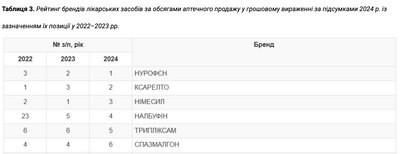
The uncontrolled circulation of nalbuphine in Ukraine is evidenced by more extensive “Proxima Research” data, which the Suspilne investigative editorial office received from a source in the medical field. They demonstrate a rapid growth in sales of this opioid during the period of the full-scale invasion. Thus, in 2020–2022, pharmacies were selling more than a million packages per year. A big increase occurred in 2023 when Ukrainians bought 2.2 million packages.
In 2024, pharmacies sold 2.9 million packages of nalbuphine. In addition, according to the Ministry of Health, last year patients used only 794 electronic prescriptions for 986 packages of nalbuphine. Thus, almost three million packages of nalbuphine were sold in 2024 with paper prescriptions that are not controlled, or without any prescriptions at all.
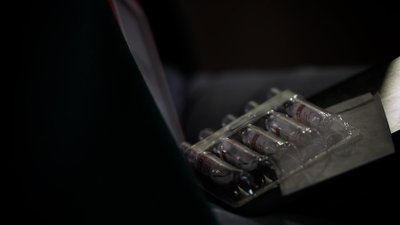
Despite the fact that nalbuphine requires a paper prescription, like antibiotics, pharmacies sell it even without a prescription. This was confirmed by an experiment that the Suspilne investigative team conducted in March 2025. The investigative journalist bought a package of nalbuphine without a prescription at the third pharmacy he visited.
“In the first two pharmacies, which belong to large chains, they refused to sell it, saying the medicine needs a prescription. In the third, little-known pharmacy, I bought five ampoules. The only thing the pharmacist was interested in was the dosage and the desired manufacturer. In another pharmacy, the word “nalbuphine” written on a piece of paper imitating a doctor’s handwriting was enough,” says Ihor Yushchenko, the Suspilne investigative journalist.
The Suspilne journalist asked Hennadii Vovk, the deputy head of the State Medical Service, to explain why nalbuphine can be purchased in pharmacies without a prescription.
“I think this is a question for the pharmacy why it sold it without a prescription, right? And if there is an appeal, we will deal with it,” said Hennadii Vovk.
According to the official, last year the State Medical Service received only one complaint about the sale of this medicine without a prescription. The pharmacy was fined.
In Ukraine, there is also criminal liability for violating the rules for dispensing prescription drugs. However, we were able to find only one court verdict in a case involving the sale of nalbuphine: a pharmacy employee in Zakarpattia region was fined 17,000 hryvnias and found guilty for violating the rules for dispensing potent substances without a prescription.
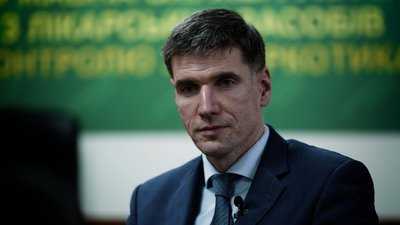
Hennadii Vovk explains this situation saying that due to martial law, the State Medical Service did not conduct scheduled inspections, and unscheduled inspections are carried out only after complaints from citizens or other government bodies.
“However, when our scheduled inspections began, we saw that 90% of this medicine was dispensed with paper prescriptions. And when we saw this situation, that this was a paper dispensing that was currently impossible to control, changes were immediately initiated,” says Hennadii Vovk.
It is about a draft order published by the Ministry of Health to include nalbuphine in the list of medicines that will be dispensed exclusively by electronic prescription. The exceptions are front-line territories, where during the period of martial law, the medicine will continue to be sold by regular paper prescription, but pharmacies will be required to keep these prescriptions for three years.
By the way, the draft order was developed by the Ministry of Health after the publication of the first Suspilne article about how nalbuphine became one of the most popular drugs in Ukraine and why this situation resembles the opioid crisis in the US, which led to hundreds of thousands of addicts and thousands of overdose deaths.
However, as of May 22, 2025, the Ministry of Health had not signed the order.
In response to the Suspilne request, the State Expert Center of the Ministry of Health reported that current protocols provide for the use of nalbuphine in the treatment of two oncological diseases: non-Hodgkin’s lymphoma and lung cancer.
The Suspilne investigative editorial office received information from the National Health Service about all electronic prescriptions for nalbuphine issued in 2023-2024 and found out that only about 25% of patients who were prescribed this drug had oncological diagnoses. In the remaining cases, nalbuphine was prescribed to patients with very different diagnoses, including, for example, osteochondrosis, diabetes, fractures, and asthma.
Who makes money on nalbuphine sales?
Despite the fact that hospitals continue to purchase nalbuphine, its use in public medicine has decreased by 94% over the past three years. According to the Ministry of Health, in 2021 medical institutions purchased almost 250 thousand packages of this opioid painkiller and in 2024 – 14 thousand.
At the same time, pharmacy sales of nalbuphine are growing. In 2024, pharmaceutical companies received more than 1 billion 71 million hryvnias from the sale of nalbuphine. This is evidenced by the data that the Suspilne investigative editorial office received from a source in the pharmaceutical sector.
The information, which the Suspilne journalists received, indicates that, compared to 2023, pharmaceutical companies’ revenues from the sale of nalbuphine increased by 44%, and compared to 2021 – by 215%.
The growing demand for nalbuphine was noticed by pharmaceutical companies. In 2022, three Ukrainian manufacturers joined the production of this drug: “Pharmac” Joint Stock Company, “Lekhim-Kharkiv” Private Joint Stock Company, and “Lubnypharm” Joint Stock Company. In 2023, the pharmaceutical company “Darnytsia” joined them. At the same time, foreign manufacturers left the Ukrainian market, but continue to supply the substance that is part of the drug.
Currently, the nalbuphine market is controlled by eight major players, among which the leader is “Yuriia-Pharm” LLC. In 2024, the share of nalbuphine from this manufacturer was 40% of total pharmacy sales. The second place is occupied by “Zdravo” LLC with 17%. The third is “Pharmaceutical Company Zdorovia” LLC – 10%.
We asked pharmaceutical companies for comments on the growth in nalbuphine sales and the number of people addicted to it, as well as on the possible inclusion of this medicine in the List of narcotic drugs, psychotropic substances, and precursors. Four companies responded: “Yuriia-Pharm”, “Zdravo”, “Darnytsia”, and “Pharmac”.
Market leader “Yuriia-Pharm”, for which revenue from the sale of nalbuphine in pharmacies last year amounted to 7% of total revenue, reported that they are aware of the increase in cases of nalbuphine addiction, which is why they support the position of the Ministry of Health:
“On the issue of strengthening control over the circulation of nalbuphine, we support limiting uncontrolled access to such medicines, while maintaining their availability for patients who really need them.”
“Pharmac”, for which revenue from the sale of nalbuphine in pharmacies last year amounted to almost 2% of total revenue, also responded that they support the Ministry of Health initiative:
“We adhere to the position that dispensing of this drug should be strictly controlled, it should be carried out exclusively upon presentation of an electronic prescription. We also believe that the State Medical Service should strengthen control of pharmacies for violations of prescription dispensing and prevent abuse and misuse of this drug.”
“Darnytsia” reported that the decision to launch production in 2023 was made because the company noticed a shortage of controlled analgesics in the healthcare system. By the way, for “Darnytsia”, the revenue from the sale of nalbuphine in pharmacies in 2024 was 2% of the company’s total revenue.
“In the event that nalbuphine is included in the list of controlled substances, we will not only adapt production and logistics processes in accordance with the requirements of the legislation, but are also ready to provide information support to the medical community regarding the safe and justified use of the drug in the new conditions,” said “Pharmaceutical Firm Darnytsia” in response to our request.
The only company that has confirmed its participation in discussions of initiatives to restrict the circulation of nalbuphine is “Zdravo” LLC. However, the company does not produce nalbuphine itself; it is only a marketing company and distributor.
“Zdravo” considers dispensing of nalbuphine with a regular paper prescription “sufficient for proper control over its use”.
“The problem of uncontrolled circulation of nalbuphine hydrochloride, which has recently been raised by the Ministry of Health of Ukraine, is largely due to the fact that some pharmacies ignore the requirements for prescription dispensing,” LLC “Zdravo” reported in response to our request.
For “Zdravo” LLC, the revenue from the sale of nalbuphine in pharmacies amounted to 37% of the company’s total revenue in 2024. Suspilne obtained this data by comparing the company’s reporting, which is publicly available on the “YouControl” resource, with data obtained from our source.
In addition, “Zdravo” LLC publicly stated that it provided nalbuphine to the military in 2014 and 2022:
“The Ukrainian pharmaceutical company “Zdravo” provided 10,000 doses of the drug “Nalbuphine” free of charge, worth over 250,000 hryvnias, for pain relief for wounded Anti-Terrorist Operation participants,” the video on the company’s YouTube channel reported in 2015.
“We distributed thousands of packages at the request of the military and territorial defense,” said Leonid Kolodiazhnyi, the operations director of “Zdravo” in 2022.
The Suspilne investigative editorial office addressed “Zdravo” LLC for a comment. We asked why the company provided nalbuphine to the military, how the company monitored the consequences of its use, and how the company assessed its responsibility.
“Zdravo” LLC responded that, by providing nalbuphine free of charge, it was responding to requests from military units to provide the medication as charitable assistance. The company also reported that it has a pharmacovigilance system that monitors the safety and effectiveness of the use of medications. According to the company, during the marketing period of nalbuphine in Ukraine, “no adverse reactions that were unforeseen for the drug were recorded”. In addition, “Zdravo” reported that it had never received requests and had not transferred the medication directly to military personnel or other individuals.
Why is nalbuphine not recognized as a narcotic?
If a medicine is included in the List of narcotic drugs, psychotropic substances, and precursors, its sale is strictly controlled by the government. Such a medicine can be purchased only with a special prescription from a doctor and in pharmacies that have a special license. Currently, there are 659 such pharmacies in Ukraine.
The issue of including nalbuphine in the list was raised back in 2011. At that time, the representatives of the State Committee of Ukraine for Drug Control stated that nalbuphine does not have a clearly pronounced psychoactive effect and is not an analogue of narcotic drugs or psychotropic substances.
“In addition, there were no reports from law enforcement agencies regarding the detection of its non-medical use,” was the State Committee’s argument for not including nalbuphine in the list.
However, in recent years, Ukrainian courts considered dozens of cases related to nalbuphine. There were also cases of attacks on pharmacists who refused to sell the drug.
Statements about the possible inclusion of the medicine in the list were also made in 2021. At that time, the State Service for Medicines and Drug Control informed the Ministry of Health that it was receiving complaints about the uncontrolled release of nalbuphine. At that time, the Ministry of Health emphasized that the medicine has many medical indications and its inclusion in the list of narcotic drugs could significantly complicate patients’ access to treatment. The Ministry initiated a discussion of the issue in an interdepartmental working group, but no changes occurred.
The experience of other countries is among the key arguments for not including the medicine in the list, which was voiced by representatives of the Ministry of Health and the State Medical Service in conversations with the Suspilne investigative journalists. In the USA, Canada, and most European countries, nalbuphine is not considered a narcotic drug and is not included in the relevant controlled lists.
However, the Ukrainian reality is significantly different: due to the war, the number of people who need pain relief is increasing, and there are already people addicted to nalbuphine.
“The problem in Ukraine with dispensing of nalbuphine is primarily due to the fact that this medicine was actually dispensed without a prescription in many cases. That is, patients could get the medicine without a doctor’s prescription. This is the main problem,” says Yevhenii Honchar, the acting director of the Department of Medical Services of the Ministry of Health.
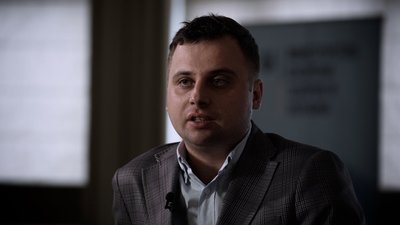
According to Yevhenii Honchar, the transition to electronic prescriptions should significantly reduce the level of nalbuphine abuse, and the effectiveness of this innovation can be assessed in three months after implementation.
“We see that there is a problem now; only a few thousand prescriptions were given, but several million doses were dispensed. Therefore, in our opinion, the very fact that these medicines should begin to be dispensed exclusively via electronic prescription will already have a dramatic effect on reducing such abuses. If this does not have the proper effect, then other measures should be considered, including putting it on the list of controlled narcotic substances, or there may be some more dramatic actions against it,” says Yevhenii Honchar.
At the same time, the official could not explain why nalbuphine had not been sold exclusively by electronic prescriptions earlier. According to Honchar, the medicine is not included in the list of narcotic drugs so as not to deprive patients of access to treatment. However, he says that he does not know the number of patients who really need nalbuphine.
Deputy Head of the State Medical Service of Ukraine Hennadii Vovk also believes that electronic prescriptions will solve the problem of uncontrolled circulation of nalbuphine.
“My personal opinion: if we abruptly add it to the list of narcotic (medicines – Ed.), this may cause that people will have limited access. Not every pharmacy can dispense narcotic (medicines – Ed.),” says Hennadii Vovk.
Meanwhile, people who have experienced the negative consequences of using nalbuphine, including the characters in the “Nalbuphine: a profitable addiction” documentary, are convinced that this medicine should be recognized as a narcotic.
“It should not be available to the general public, in pharmacies. It should not even be sold by prescription. It should only be dispensed by doctors. It should not be so that any person can buy it. It is a narcotic,” says veteran Anton Kucheriavyi, who managed to recover from nalbuphine addiction.
“It is good that it is no longer in first-aid kits. However, many people have become addicted to it since 2022, and, unfortunately, continue to have this addiction. This medicine definitely should not be freely available to patients. No way. There are specialized pharmacies where psychotropic substances are sold. Yes, there are also different options, shady schemes, but it is much more difficult to buy it there,” Viktor Nikitchenko, the head of the department at the Vinnytsia Regional Psychoneurological Hospital, is convinced.
According to the expert, the government should provide military personnel with painkillers so that they are not forced to buy medicines at their own expense.
However, as of May 22, 2025, nalbuphine is still available with paper prescriptions, which no one controls.