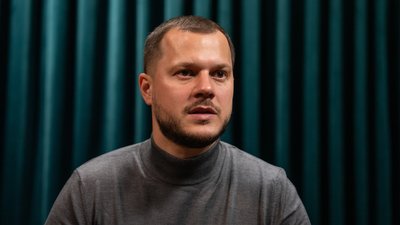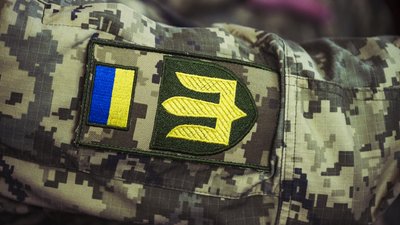

In 2024-2025, at least two children from the temporarily occupied territories of Ukraine were brought by the Russians to the Songdowon camp in North Korea for “re-education”. Kateryna Rashevska, a human rights activist and expert of the Regional Center for Human Rights, reported this during hearings in the US Senate on December 3, 2025. The Suspilne investigative editorial office established that the trips to the camp were coordinated by Russian youth organizations, including the “Movement of the first”. We also identified Ukrainian children who visited North Korea, found out how the groups were formed, and what the daily life and rules in Songdowon are.
North Korean analogue of Artek
The Songdowon International Children’s Camp is located near the port city of Wonsan on the Sea of Japan. It is often called the North Korean analogue of the Soviet Artek camp.
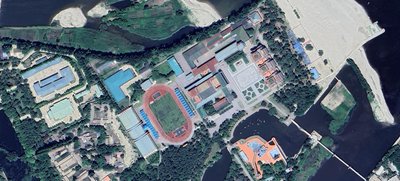
The camp was opened in 1960, and renovated in 2014. Children from Russia, China, Vietnam, Laos, and some African countries visited the camp. However, due to the COVID-19 pandemic, Songdowon was unavailable for foreigners. In 2024, when the relations between Moscow and Pyongyang became closer, Russian tourist groups began visiting North Korea again, and a group of schoolchildren visited the Songdowon camp in the summer.
According to the North Korea tourist website, the majority of the costs for the foreign children’s stay at the camp are covered by the North Korean Socialist Patriotic Youth League. Foreign parents reportedly pay additional $250 to $350 for their child’s two-week trip.
Russia organized a competition to visit the North Korean camp
In 2024, the Russian youth organization “Movement of the first” announced a competition “The first go to Songdowon”. The winners received free trips to the North Korean camp.
The organizers called the trip a joint project of the “Movement of the first”, the sanctioned international children’s center Artek, and the directorate of the World Youth Festival. According to Russian media, 3,500 schoolchildren aged 14-17 from different regions of the Russian Federation applied to participate. 50 teenagers became the winners.
To participate, children had to record a video answering the question “Why should I win the contest?” and write an essay on one of the topics: “What role do I see Russia playing in the new multipolar world?”, “Why am I interested in visiting North Korea?” or “What would I like to tell children from North Korea about Russia?”
Applications for participation were accepted via an online form, and participants posted their videos on social media. The selection coordinator was Maria Rayevska, one of the leaders of the “Movement of the first”.
In the summer of 2025, Russian media reported about the second trip of schoolchildren to Songdowon, which had to demonstrate the Korean-Russian friendship.
The Telegram channel “Youth of Russia” stated that the main goal of Russian children’s trips to the camp was “to increase traditional fraternal relations between two peoples”.
“Why do they need these international exchanges? The official version of the Russians is that Russian children are learning about the culture of North Korea, that is, they discover a new country for themselves and disprove myths about it. North Korea actually legitimizes its regime and popularizes the Russian language and Russian culture within the country among children and adolescents. Why do they need this? After all, they need to recruit these people, when they grow up, for Russian wars,” human rights activist Kateryna Rashevska told the Suspilne journalists.
“People do not complain about anything”: the stay of a Ukrainian boy at the Songdowon camp
In 2025, there were two summer terms at the Songdowon camp: from July 21 to August 1 and from August 18 to 29.
The Suspilne investigative editorial office found the list of all children in open sources. We compared the names with other mentions of the camp in Russian publications, and some of the information was confirmed through messages in thematic Telegram chats where the children communicate.
We will not publish the names of the children who were taken to the camp in North Korea for security reasons. However, we will tell the story of Ukrainian boy Mykhailo who visited the first summer term in 2025.
We found out that 12-year-old Mykhailo was the only child from the temporarily occupied territories of Ukraine. He is from the town of Makiivka, which was occupied in 2014.
Mykhailo studies at a local school and actively participates in competitions dedicated to Russia. For example, in 2023 he became a bronze winner of the all-Russian competition “Miracle of Russia” for the video presentation “Venerable Ilya of Makiivka”. In the video, Mykhailo said that he was proud that “the Donetsk People’s Republic became part of great Russia” and expressed hope that the war would end with the victory of the Russian Federation.
Mykhailo’s mother, Iryna Popova, is a Doctor in Economics, associate professor, and head of the banking department at the Donetsk National University of Economics and Trade. We were unable to find information about his father.
We found a post on a Russian social network in which Mykhailo told about his trip to North Korea. In a comment to the propaganda publication “ZOV DNR”, Mykhailo said that he learned about the competition to visit the camp on the website “Youth of Russia”.
At the camp, Mykhailo participated in joint cultural and sports events.
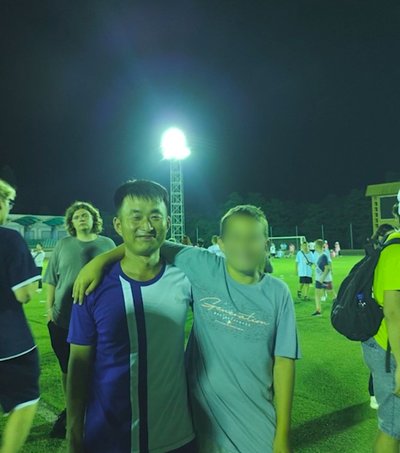
According to the boy, he learned more about the culture and traditions of both countries at the camp. “We had fun and visited various monuments dedicated to the Korean War and monuments to the leaders of North Korea,” the boy said.
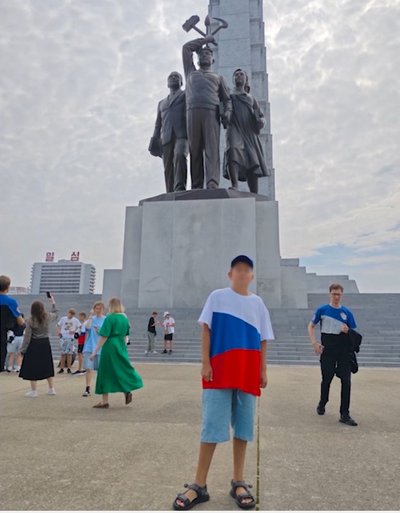
In a comment to another publication, Mykhailo said that the children visited five or six monuments every day, “I really liked it. People have such a developed personality cult: they really honor Kim Il Sung, Kim Jong Il, Kim Jong Un. People go around and no one complains about anything. Everyone has everything, and everyone is fine.”
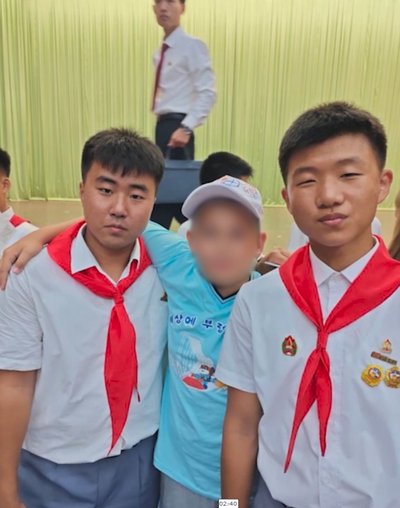
Mykhailo also said in the video that all the participants in the camp exchanged contacts, but he is unable to stay in touch with his Korean friends because North Korea has its own social networks.
“Together we will bring closer the day when American imperialism will be destroyed”: camp ideology
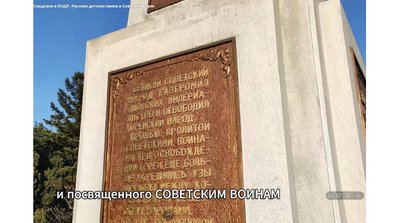
The path to the “ideological summer” began for the children of the first term, among whom was Mykhailo, at the Vladivostok airport. The first stop was Pyongyang. After arrival, the participants were expected to go through a mandatory cultural program: a visit to the Liberation Monument and relax in a local water park.
The main idea of the monument is recognition and gratitude for the liberation of Korea from Japanese colonial rule in August 1945, which, according to Pyongyang’s official position, took place with the participation of Soviet troops.
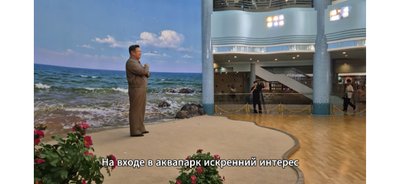
At the Pyongyang water park, children saw the statue of former North Korean leader Kim Jong Il.
The camp also promotes Russian propaganda narratives. In a video posted in 2024, one of the camp participants delivers a speech, which is then translated into Korean, against the backdrop of armed Russian soldiers:
“Now that Russia and North Korea have become allies, the days of American imperialism are numbered. Washington, which is rapidly losing influence, will try to start a new conflict near our borders. Therefore, we must be vigilant and always ready to repel new US aggression. We, the young army, and you, our North Korean allies, will become the new followers of our fathers who serve in the armed forces of the Russian Federation and the Korean People’s Army. And together we will bring closer the day when American imperialism will be destroyed,” the speaker says in the video.
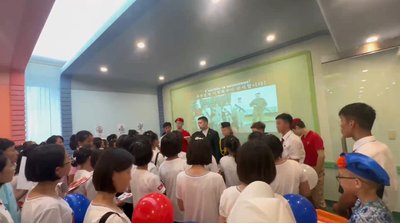
The speaker in the video is Vladislav Kushnirenko, a history teacher at school No. 80 in Khabarovsk and a former activist of the “Young Guard”. In August 2024, Kushnirenko visited Songdowon with 18 students. That same year, he organized a group at his school to study the state ideology of North Korea. In addition, he regularly attends events related to North Korea.
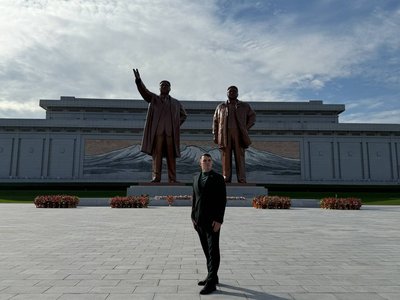
During the “friendship evening” on July 29, 2025, Russian schoolchildren wrote a letter of gratitude to North Korean leader Kim Jong Un.
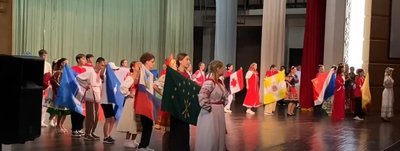
In 2024, 16-year-old Lisa from occupied Simferopol also won a competition of the “Movement of the first” to travel to the North Korean camp. She wrote about this on a Russian social network, and we found her on the list of children who were selected for the trip. However, it is unknown whether Lisa actually went to the camp. Despite her activity on social networks, the girl did not mention her trip to North Korea, although in a publication about the results of 2024 she wrote about the three Russian camps she visited.
“From what I see in the camp program, they promote the idea that Russia and North Korea are countries that are incomprehensible to others. They have their own special culture and vision of how a country should be built and how children should be raised. Other countries do not share this vision, and that is why Russia and North Korea “need to unite to confront the world”, says human rights activist Kateryna Rashevska.
Cleaning of the monument and paid calls to relatives
We learned about the living conditions of children in the camp from a video on YouTube and Russian publications. In an interview, a schoolgirl who had visited the Songdowon camp said that every morning at 6:30, the children had to clean and sweep around the monument to North Korean leaders Kim Il Sung and Kim Jong Il as a sign of respect for traditions and the country’s leaders.
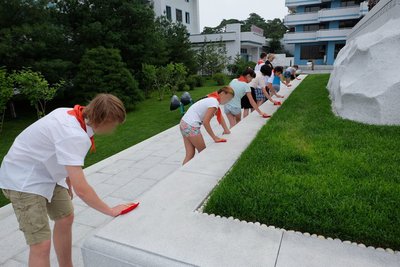
Korean children who also vacationed at the camp always had to bow to the portrait of the leader that hung at the entrance to the dining room, the girl said in an interview.
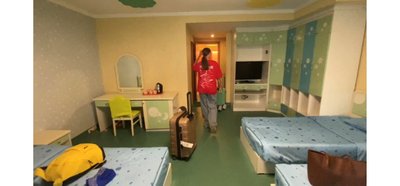
The rooms, which were identical in layout and interior, housed five or six children. Each room had a separate shower and toilet.
In most of the videos that we watched, the children emphasized that photography and videography are strictly regulated in North Korea. One of the video creators said that they were allowed to film everything except slogans, military personnel, and statues of leaders.
In the camp, the children were without communication and access to the Internet, because North Korea has its own intranet and messengers. There are special rooms with phones in the camp to communicate with the relatives. It was forbidden to film in such rooms, however, one of the participants of the trip shot a video that shows representatives of the camp.
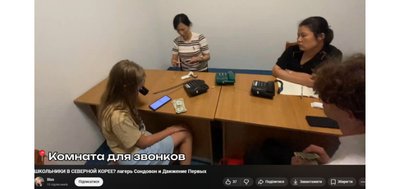
According to her, a minute of calling cost $1, so each child turned on the stopwatch on the phone.
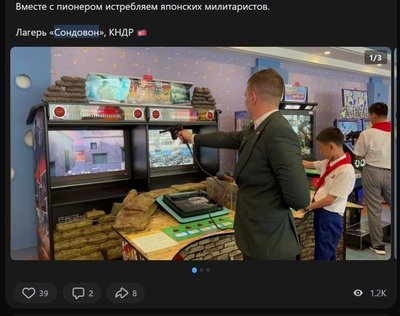
Camp visitors also said that among the entertainment there were computer games with violent, politicized plots, for example, with the blowing up of the White House.
They educate tolerance towards war
We asked human rights activist Kateryna Rashevska why, in her opinion, Russians send children to the North Korean camp.
“Children’s trips, including from the occupied territories of Ukraine, to North Korea are presented by Russia as “cultural exchanges”, an element of the so-called children’s diplomacy. But in essence, they are a tool of political propaganda,” Rashevska replied. “Such practices have much in common with Soviet methods of using children for state ideological purposes and are prohibited by international law. This is not about culture or development, but about forming loyalty to the aggressor country and its allies, in particular North Korea, which is actually an accomplice in the war against Ukraine and is recognized by the US as a state sponsor of terrorism.”
According to Rashevska, if such trips continue, more and more children from the occupied territories will find themselves in an environment where a distorted picture of the world will be systematically imposed on them, as well as aggression will be normalized and they will be convinced of the “rightness” of war. After such an experience, it is not enough to physically return a child to Ukraine: the consequences of ideological influence are usually deep and long lasting.
“Despite the external “peacefulness” and ostentatious culturalism, such initiatives have signs of politics with elements of destructive influence,” the human rights activist concludes. “Their goal is not children’s diplomacy or child development, but the formation of loyalty, the imposition of peace-hating ideologies, tolerance of violence and tyranny, and the substitution of values. That is why such practices require a clear international assessment and response.”