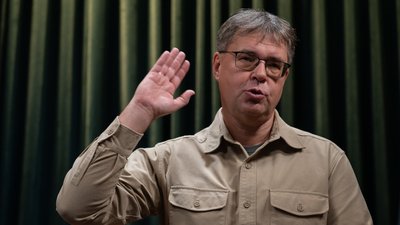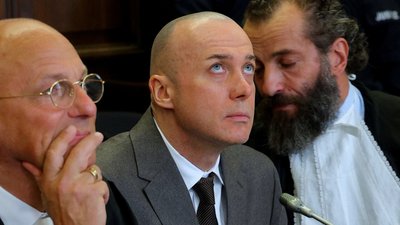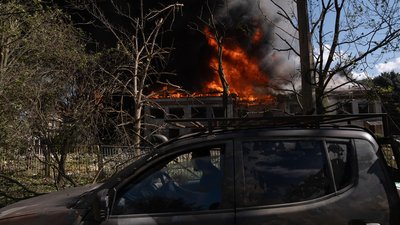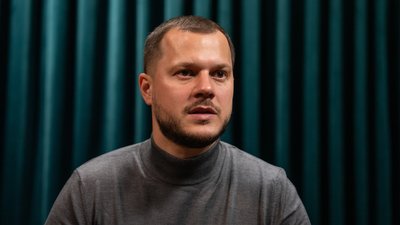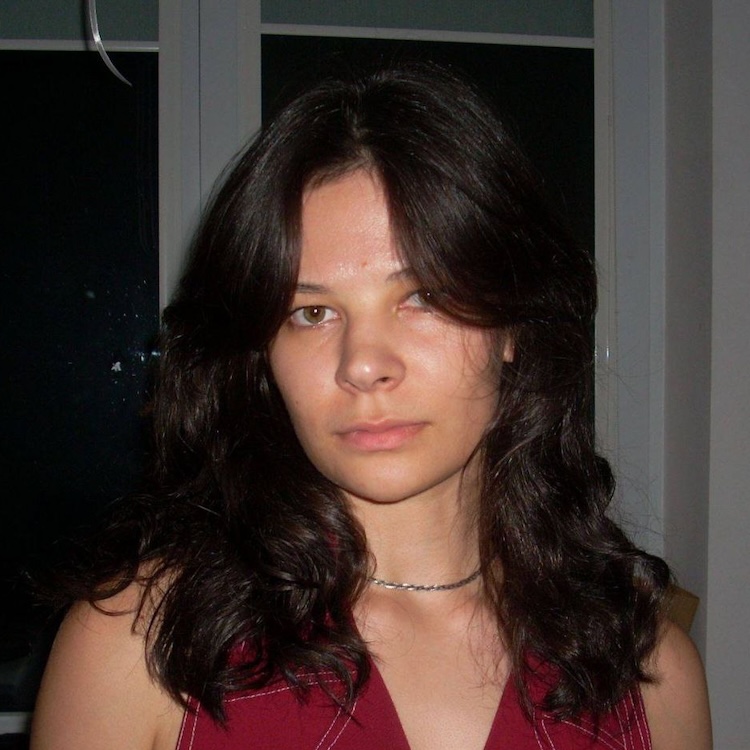

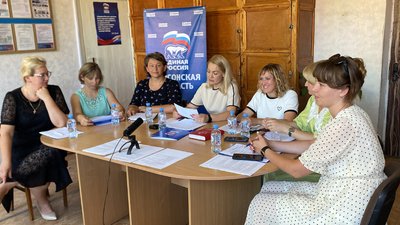
On March 12, 2025, a meeting of the regional branch of the "Union of Women of Russia" took place in temporarily occupied Henichesk in Kherson region. This organization positions itself as one that protects women’s rights. The participants of the meeting, among whom were Ukrainian collaborators, discussed "the challenges of motherhood, social support for families, and the socialization of children with disabilities". The Suspilne investigative editorial office has identified key meeting participants who, despite their Ukrainian roots and citizenship, supported the occupation of Kherson region and are now promoting Russian values.
They support Russia’s war against Ukraine
The "Union of Women of Russia" is called the oldest "gender" organization in the country, because it is a continuation of the Soviet Women’s Committee formed in 1941. Today, the Union closely cooperates with the authorities of the Russian Federation, and its funding is provided, in particular, by the ruling "United Russia" party.
The organization promotes the "traditional" roles of women as mothers and guardians of the "family hearth". However, according to Olga Suvorova, a former member of the banned in Russia feminist movement "Soft Power", the Union does not provide real support to women, for example, it does not comment on the need to pass a law on criminal liability for domestic violence.
The Union’s representatives did not condemn the start of a full-scale invasion of Ukraine, and some regional branches supported the Russian army. For example, the branch in Ingushetia appealed to Kremlin leader Vladimir Putin to continue the offensive.
The Union currently has 89 regional branches. After February 24, 2022, the Union’s branches were also created in the newly occupied territories of Ukraine. Earlier, the organization began operating in Crimea.
Keynote speaker of the meeting
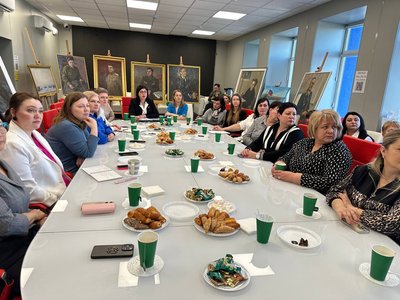
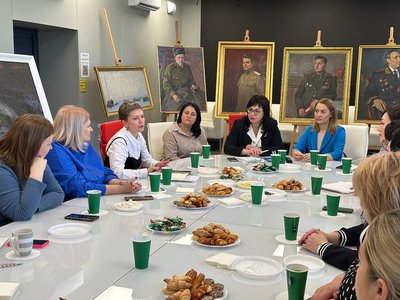
On March 12, 2025, the propaganda channel "Tavria" reported on the meeting of the Kherson branch of the "Union of Women of Russia". Surrounded by portraits of Soviet generals and works by Russian battle artist Maxim Grekov, the participants "discussed the problems of women in education, career, family, and medicine".
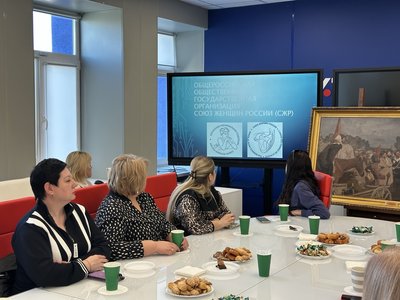
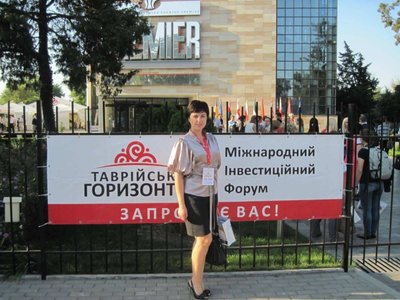
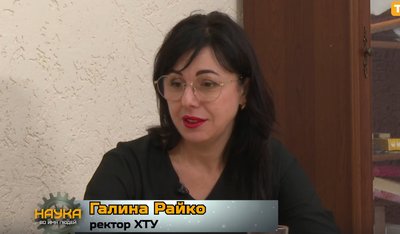
The keynote speaker of the meeting was Halyna Raiko, the head of the Kherson branch of the "Union of Women of Russia". Before the full-scale invasion, she was the head of the Department of Information Technologies at the Kherson National Technical University.
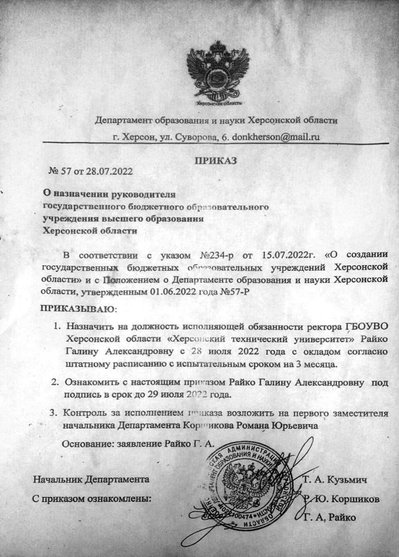
In July 2022, Raiko agreed to head the "Kherson Technical University", with which the occupiers substituted the Kherson National Technical University.
In 2023, Raiko joined the Civic Chamber of Kherson region, founded by the occupiers, a structure where the public supposedly discusses social issues, communication with the authorities, and their initiatives.
Under the leadership of Raiko, the Kherson branch of the "Union of Women of Russia" sent humanitarian aid to Russian soldiers, planted trees in memory of the fallen occupiers, and held thematic photo exhibitions.
According to the official register of child abductors, maintained by the Ukrainian Main Directorate of Intelligence, Raiko is involved in organizing the illegal relocation of Ukrainian children from the temporarily occupied territory of Kherson region.
According to the Evocation platform, which documents the activities of collaborators in the temporarily occupied territories, in the autumn of 2022, Raiko, as the head of the occupation university, organized relocation of underage students to temporarily occupied Crimea using forged powers of attorney from their parents.
The trip was called a "health vacation", but after the two-week "vacation", the students did not return home. Instead, they were held in Russian sanatoriums and camps, where the invaders tried to Russianize them.
The facts exposing Halyna Raiko’s activities have already been documented by the Ukrainian law enforcement. The Security Service of Ukraine has charged her with collaboration under Article 111-2 of the Criminal Code of Ukraine. She faces 10 to 12 years in prison.
Despite this, Raiko continues her propaganda work. She runs the "Science for people" YouTube channel, in which Ukrainian collaborators talk about "scientific progress", the integration of young people into Russian scientific projects, and building a career under occupation.
Some of the guests from her videos attended the meeting of the "Union of Women of Russia" in Henichesk on March 12.
Head of the occupiers’ employment service
Iryna Mordachova (Pakhomova) was among those who spoke at the "Union of Women of Russia" meeting in Kherson.
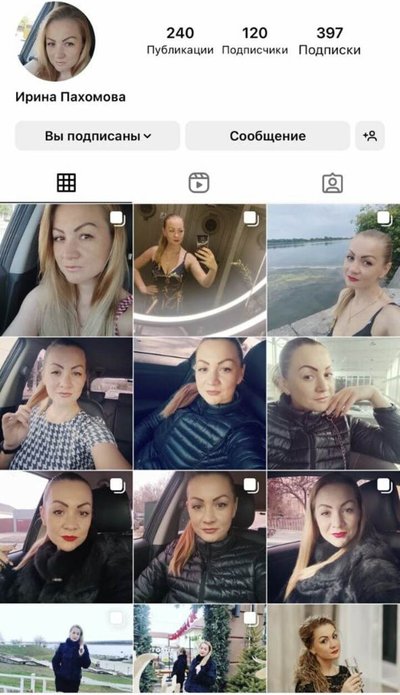
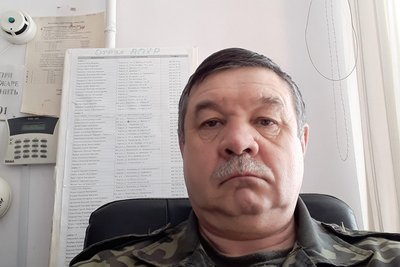
According to our sources, before the full-scale invasion, Iryna worked at Kherson regional energy company. Her father Sergey Pakhomov holds a managerial position at the Kherson Bread Products Plant and, as our sources add, he fired employees who did not agree to collaborate with the occupiers.
In 2023, Iryna became the first head of the occupiers’ employment service in Kherson region. Mordachova joined the regional branch of the "United Russia" party and began creating so-called "women’s clubs" that claim to promote education and employment of women in the region.
Educator who promotes Russian standards
Olena Yakymchuk is another participant in the Henichesk meeting. Before the full-scale invasion, she, PhD in Technical Sciences, headed the Design Department at the Kherson National Technical University. Yakymchuk joined the occupation administration and after the liberation of Kherson, she moved to the left bank of the region.
According to the National Police of Ukraine, she organized the educational process at her department in the Russian language and ensured that other teachers adhered to Russian educational standards in teaching and scientific work.
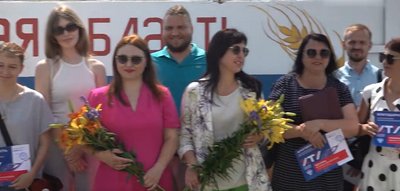
Yakymchuk’s husband, Dmytro, organized the change in the language of instruction from Ukrainian to Russian at the Faculty of Information Technology. The couple participated in the opening of the mural "Kherson region together with Russia" in Henichesk in 2023.
In 2024, the National Police of Ukraine notified Olena Yakymchuk of suspicion and put her on the wanted list.
The secretary of the university admissions commission and the head of the occupiers’ institution
Olena Burlakova, the secretary of the admissions commission of the created by the occupiers Kherson Technical University, also attended the Union meeting in Henichesk. In her Russian social media account, she indicated that even before the full-scale invasion, she had been working with a Russian electrical repair company.
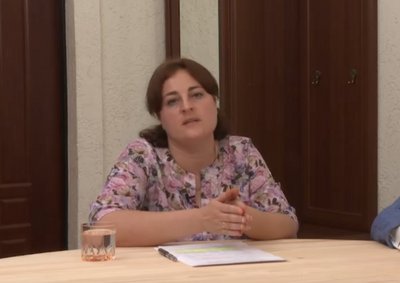
Another speaker at the March 12 event was Anna Lytvynenko, a native of Henichesk who worked in the pharmaceutical industry before the full-scale invasion. When Russia occupied part of Kherson region, she joined the "United Russia" party and headed the occupiers’ territorial compulsory health insurance fund of Kherson region.
Organizer of the looting of the Kherson Art Museum
Another participant in the meeting in Henichesk is Nataliia Desiatova, a person involved in the Security Service of Ukraine investigation into the looting of the Kherson Art Museum.
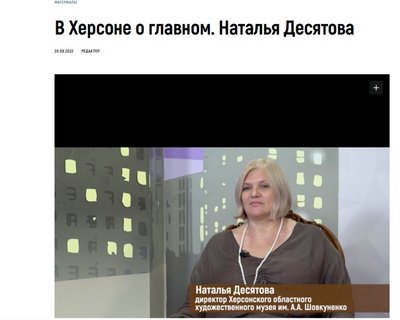
Before joining the occupiers, Desiatova worked as a singer at the "Teatralne" cafe in Kherson. After the city was captured, she headed the Kherson Regional Art Museum named after Oleksii Shovkunenko and supervised the so-called "evacuation" of works of art to Crimea.
According to the text of the suspicion notification announced to Desiatova, she, as the "director" of the museum, in an interview with Russian propagandists spread Russian narratives and helped the invaders hold an exhibition of photographs of a resident of the Russian Kaliningrad region entitled "We are forever together in this great family of fraternal peoples of Russia".
Natalia Desiatova was informed of suspicion of collaboration under Part 6 of Article 111-1 of the Criminal Code of Ukraine. The sanction of the article provides for imprisonment from 10 to 12 years with deprivation of the right to hold certain positions or engage in certain activities for a term of 10 to 15 years and with or without confiscation of property.
From a secretary to the head of employment service
Larysa Bochko came to Henichesk from Novotroitskyi district of Kherson region.
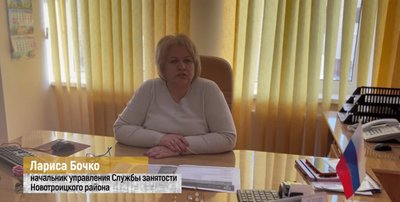
In 2023, the Security Service of Ukraine declared suspicion to her husband, Yurii Bochko, who headed the occupation administration of Novotroitskyi district. That same year, his case was sent to court.
Larysa Bochko became his secretary, and later took the position of the "head of the Novotroitskyi district employment service department".
According to the Anti-Corruption Dimension, the couple’s children also sided with the occupiers. Their son Hryhorii became the "head" of the village of Chumatskyi Shliakh, and his wife became a secretary in the occupiers’ village council.
How Russia uses humanitarian initiatives to support the occupation
From March 2022 to the end of February 2025, the Kherson region Prosecutor’s Office announced 1,613 suspicions of collaboration. Some of them, as we have already noted, concern women who participated in the meeting of the Kherson branch of the "Union of Women of Russia".
We asked Andrii Orlov, the director of the Center for Strategic Development of Territories, to explain how the activities of organizations such as the "Union of Women of Russia" promote the Russification of the temporarily occupied territories of Ukraine.
"Starting from the Chechen campaigns, Russia, through the humanitarian direction, is methodically consolidating its hegemony in the territories, by seizing which it wants to satisfy its imperial demands," says Andrii Orlov. "The export of such projects as “My History — Russia" and "Immortal Regiment" promotes a foreign policy message: "be friends with Russia, unite with Russia, and do as Russia, because with Russia it is safe, good, and profitable". Ukraine has fully experienced this. The elements of implantation of ideological pro-Russian narratives through soft projects into all layers of the society have been taking place almost since the day the USSR collapsed."
According to Orlov, for the occupied territories of Ukraine, the Russians use a simple technology: they hold a pseudo-referendum with falsified results, and during the subsequent occupation, they instill in the inhabitants of these territories the idea and memory that it has always been this way, that this is their choice, and that these regions have no other history than as part of Russia.
"A large number of projects are being implemented in the occupied territories today. They are mainly aimed at those segments of the population that are exposed to maximum influence. These are children and youth, the elderly, and religious people," Orlov continues. "Examples: an exhibition of drawings by children from Zaporizhzhia region in Moscow, the project "Russia — a country of opportunities" for over two thousand young residents of the occupied territories, the personnel competition "Zaporizhzhia Heroes" (boys with secondary specialized and general education can apply to participate in it and undergo training organized by the Russian Academy of National Economy and the Civil Service under the president of the Russian Federation), creation of the museum-temple "Heart of Novorossiya" at the "Korsun Icon of the Mother of God" convent in the village of Korsuntsi, Novokakhovskyi district. There are lots of such programs and projects, and they are financed very well. This allows the Russian authorities to solve both external and internal problems."
"First, these programs allow directing funds to the humanitarian sector, thereby supporting political scientists, psychologists, sociologists, and journalists. In fact, it is buying them so as not to receive oppositional manifestations from them. Second, such programs are also implemented in Russia itself in order to consolidate hegemony, keeping the Russian society from collapsing.
As for the foreign policy, all these programs are actively promoted in the international arena, providing legitimization of the occupation. They say "this is the choice of the residents of these regions themselves", "we liberated them", etc. And the influence of this information can already be seen in the statements and publications of politicians and public figures from different countries."