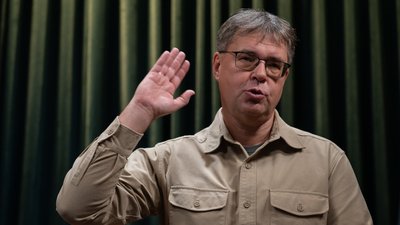

"We fought against the obvious genocide initiated by the Kyiv authorities. The people of Donbas have become a rock that cannot be defeated and forced to do anything." You probably read these obviously propagandistic words with incomprehension and indignation. And for good reason. This was said by the so-called "minister of culture" of the occupied part of Luhansk region, Dmitry Sidorov, in an interview with Moroccan journalist Rachid Achachi. Their conversation became part of the propaganda film "Donbas: the vanguard of the Russian world", which was planned to be shown on Moroccan television in November 2024. Due to a protest from Ukraine, the screening was canceled.
Rachid Achachi’s film prompted the Suspilne investigative editorial office to analyze the influence of Ukraine and Russia in Morocco. This African country is one of NATO’s largest non-aligned partners that maintains neutrality regarding the Russian-Ukrainian war, and journalism is a matter of following the rules of the monarchy there. We also wanted to analyze how Ukraine is trying to turn the country’s neutrality into support for its side.
Achachi’s film as an example of Russian propaganda in Morocco
Moroccan journalist and geopolitics specialist Rachid Achachi arrived in occupied Luhansk on September 10, 2024 as part of the delegation of "Comitas Gentium France Russie", an association of French and Russian lawyers.
"Comitas" holds propaganda conferences and provides funding for various projects, such as film production. The association’s office is registered in Paris and has more than 20 employees of Russian and French origin, but the website’s registration location, administrator contact details, and original domain are all from Moscow.
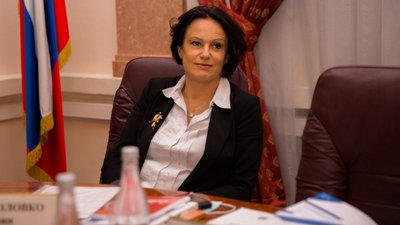
The association is headed by Karine Bechet-Golovko, a French lawyer and lecturer who has been living in Moscow since 2002. Her husband, Leonid Golovko, is a professor at the Faculty of Law of Lomonosov Moscow State University.
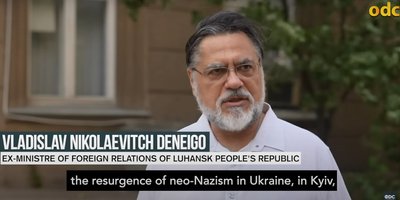
The association invited Achachi to visit the occupied territories of Luhansk and Donetsk regions to show "real life" in these lands. His film contains interviews with local doctors, teachers, and French mercenaries fighting on the side of the separatists, who talk about their participation in the war. Achachi criticizes the Maidan and calls the actions of Ukrainian troops an "invasion of Donbas". In general, the film contains the entire set of popular Russian messages: discrediting Stepan Bandera and the soldiers of the "Azov" unit, accusation of the Ukrainian military of crimes against civilians, an interview with the so-called minister of culture of the occupied part of Luhansk region about the "independence of Donbas" and the historical connection with Russia. In addition, the film contains sympathy for Daria Dugina, the daughter of Russian ideologist Alexander Dugin, who was killed in 2023.
In November 2024, Achachi posted his movie on his YouTube channel "ODC TV", which has over 100,000 subscribers. However, the film garnered only 4,000 unique views and 20 comments, which indicates little interest in it.
Ukraine called on the Moroccan government to ban the screening of the movie at national film festivals and to communicate with YouTube to remove the film.
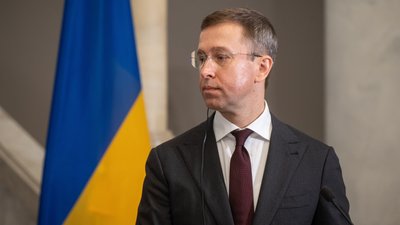
"The screening of the film, which had been announced in Morocco in November, was canceled due to our intervention through the Ministry of Foreign Affairs, Parliament, and government structures. We were able to convey the position that separatist sentiments are not in Morocco’s interests, especially given their relations with the so-called "Polisario area". This region is considered a self-proclaimed territory with an autonomous system of governance, which seeks to recognize the southern provinces of Morocco as sovereign and independent, with the prospect of separation from the territory of the country. This contradicts the position of most countries and is critically important for Morocco itself," Ukraine’s Ambassador to Morocco Serhii Saienko told the journalists of the Suspilne investigative editorial office.
The Moroccan authorities cannot ban or remove certain products from YouTube. However, the ambassador claims that the Moroccan side has already started monitoring narratives that harm both them and Kyiv:
"Over the past 2-3 months, we have seen a decrease in such rhetoric on various platforms. The communication with YouTube is ongoing, but restricting or banning such content is a complex and long-term process."
So who is Rachid Achachi? He was born in St. Petersburg and lived there until he was three years old. He has Russian and Moroccan citizenship and often visits Russia. In addition to occupied Ukrainian Luhansk, he was in Siverskodonetsk, which the Russians captured in 2022.
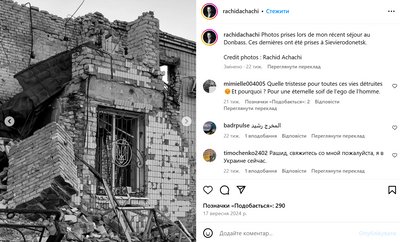
"As I am both Russian and Moroccan, I have always felt a connection with Russia. I believe that it is impossible not to be interested in geopolitics when you deal with Russia. Russia is not an ordinary country. And this is not only about the Cold War, but also about what happened after it. The West wants to destroy Russia, and sometimes Russia itself wants to destroy itself," Achachi said in an interview with Russian scholar Anton Malafeev.
Achachi’s numerous analytical articles, interviews, and conference appearances often contain pro-Russian narratives. For example, in an interview with French analyst Xavier Moreau, he emphasized Russia’s "strategic advantages" in the conflict with NATO, stressing that the West is putting pressure on Russia, provoking global risks.
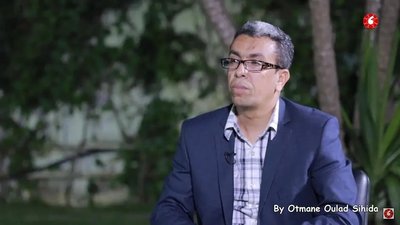
Achachi remains a prominent figure in the Moroccan media landscape, where strict censorship prevents journalists from expressing views that contradict the monarchy’s official policies. At the same time, according to our observations, there are almost no independent journalists in Morocco with pro-Western or pro-Ukrainian views who work with reliable sources.
Morocco: the frontier of neutrality
North Africa, or the Maghreb, which includes Morocco, has been a strategically important region for Russia since the Soviet era. Russia’s influence in Africa waned in the 1990s, but after the annexation of Crimea in 2014 and the imposition of sanctions, Moscow stepped up its activities on the continent. The Maghreb countries are increasingly coming under Russian influence through military exercises and cultural diplomacy. However, Morocco remains one of the few neutral countries.
Ukrainian diplomats in Morocco are trying to create a positive image of our country and disseminate objective information about the Russian-Ukrainian war in the local media. However, due to limited government resources in Ukraine, effective counteraction to Russian propaganda remains a challenge.
Morocco is a constitutional monarchy, where the king has significant influence over political, social, and religious aspects of life. Policies of censorship and neutrality are shaped under his control.
According to the Reuters Institute research, the overall trust in news sources in Morocco was low (31%) in 2024. Some holdings have higher levels of trust, such as the media company "Medi1 TV", which is funded by both private banks and Moroccan pension funds.
More unbiased media outlets risk being blacklisted by the government or facing criminal charges. For example, on November 18, 2024, the editor-in-chief of the news website "Badil.info" was sentenced to 18 months in prison on charges of defamation against the Minister of Justice. Although the Moroccan human rights group "AMDH" told Reuters that the case should have been heard under special media legislation that does not carry prison sentences, a "Badil.info" journalist had already been arrested and sentenced to three years in prison in 2017 for "failing to report a threat to national security" after covering a peaceful march banned by authorities.
Due to the high level of censorship, Moroccan media are forced to maintain neutrality regarding all events in the country and the world. They do not condemn Russia or support Ukraine, relying on Morocco’s official position of non-interference in any military conflicts.
"Morocco has always opposed the use of violence to resolve disputes," Moroccan Foreign Minister Nasser Bourita said in March 2023 during a press conference with Austria’s Deputy Federal Minister for European and International Affairs.
The Minister also emphasized that the Kingdom’s position on the Russian-Ukrainian war is based on a number of principles, including respect for international law and the UN Charter, preservation of state sovereignty, respect for the territorial integrity of UN members, peaceful resolution of disputes, and support for a positive good-neighborly policy.
On March 2, 2022, Morocco’s representative was absent during the vote on the UN General Assembly resolution calling for the withdrawal of Russian troops from Ukraine. In early 2023, Morocco also abstained from the vote on the resolution condemning Russian aggression. This caution is explained, in part, by the fact that Russia, a permanent member of the UN Security Council, plays a role in resolving the conflict over Western Sahara, a sensitive issue for Morocco’s foreign policy.
However, despite its cautious stance, Morocco became the first Maghreb country to provide military assistance to Ukraine, handing over 20 modernized T-72B tanks. This decision was lobbied by the United States.
Pillars of Russian influence
Russia is trying hard to create a positive image among African elites and public, emphasizing that it never colonized Africa and that many African leaders were educated or trained in the USSR.
The report by the South African Institute of International Affairs states that during the 2019 Russia-Africa Summit, participants noted that Western media outlets were portraying Russia in a negative light, and the director of the Moroccan news agency "Maghreb Arabe Presse", Khalil Hashimi Idrissi, urged Africans to stop looking at the situation "through the eyes of Reuters or the Associated Press".
Russian foreign language broadcaster RT provides content in English, French, and Arabic for African countries such as Algeria, Morocco, and South Africa, and collaborates with local media.
However, Russian media are significantly inferior in popularity to leading Moroccan publications such as 2M і Medi1, as well as international Arab networks such as Al Jazeera and France 24, which dominate the Moroccan media space.
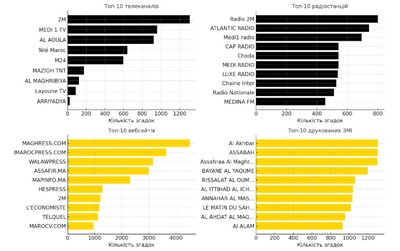
Russia uses social media and YouTube to engage young audiences in Morocco. The dissemination of Russian narratives also often occurs indirectly through partnerships and cultural initiatives, such as those organized by "Russian houses".
"Russian house" is a representative office of the Russian Cooperation Agency, a federal agency responsible for international humanitarian cooperation and the promotion of the Russian language. The institution currently has official representative offices in eight countries on the African continent.
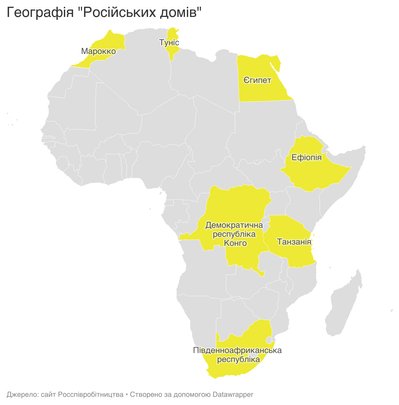
In addition to popularizing Russian culture, language, and science, the "Russian house" in Morocco promotes academic and scientific cooperation between the Russian Federation and Morocco, and maintains ties with the Russian diaspora. Every year, the "Russian houses" participate in the selection of foreign students to Russian universities and work with graduates.
For example, at the beginning of the 2022-2023 academic year, approximately 3,400 Moroccan students were studying in Russia in bachelor’s, master’s, and specialist programs.
Before the full-scale invasion, Ukraine was also a popular study destination for Moroccans. In 2020, about 76,500 foreign students from 155 countries studied in Ukraine. Moroccan students made up about 12% of this number, or more than 9,000.
However, the war led to a significant outflow of foreign students, including Moroccans. As the Embassy of Ukraine in Morocco noted in a comment to the Suspilne, in 2024, only 1,500 Moroccan students were studying in Ukraine.
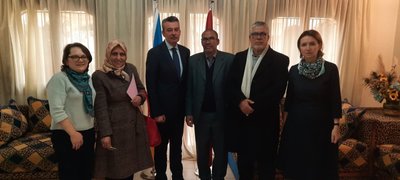
Russian universities, in turn, are conducting campaigns to attract Moroccan students to study in Russia. For example, on December 5, 2024, about 400 Moroccan students and teachers joined a presentation of Russian universities. The Moroccan Hassan II University and the Russian St. Petersburg State University signed a cooperation agreement.
Due to the full-scale Russian invasion, Ukraine has temporarily suspended initiatives to attract Moroccan students. However, Kyiv is helping those who were forced to suspend their studies at Ukrainian universities to complete their educational programs. For example, the Ukrainian embassy provided Moroccan medical students with the opportunity to take the "KROK" exam abroad. Morocco, in turn, has launched a platform for the reintegration of students from Ukraine into the national education system.
Ukraine enters the game
On June 20, 2022, in an address to the African Union (an intergovernmental organization that includes 55 African countries — Ed.), President Zelensky announced a set of measures designed to expand Ukraine’s cooperation with the continent. Ukraine’s relations with Morocco were especially strengthened after the visit of Foreign Minister Dmytro Kuleba on May 22, 2023, during which Kyiv confirmed the recognition of the autonomy of the Sahara within Morocco.
"The territory of Western Sahara is considered a disputed territory. This is a historical phenomenon associated with Morocco’s independence in 1956, revolutions, and territorial disputes with Algeria. The autonomy plan proposed by Morocco provides for a structure of autonomy that is actually similar to that in our case of the Autonomous Republic of Crimea. This allows forming the policy of territorial integrity of the country. We support this approach of Morocco and have expressed that we have a common nature of political and diplomatic relations," the Ukrainian ambassador told the Suspilne.
According to him, the monarchy has requirements for screenings of Ukrainian products: to present "peaceful" or historical films; not to distribute modern films that openly condemn and demonstrate the Russian invasion of 2022.
However, on February 19, 2024, the film "Olga" by French-Swiss director Elie Grappa about the events of the Revolution of Dignity was screened in Rabat. In November 2024, the film "Culture vs. War" about Ukrainian artists who joined the fight against Russian aggression was shown.
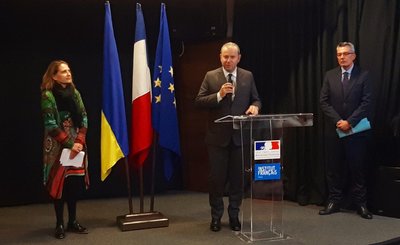
Some aspects of the Ukrainian history, in particular the recognition of the Holodomor as genocide of the Ukrainian people, remain sensitive topics for cooperation with the Moroccan government.
"In this case, the position declared by Morocco as non-interference in historical issues that are not directly related to the country causes us some surprise, but we must respect both the choice and the position of this country. This is a sovereign right, but I believe that Kyiv should promote information and explanatory work at the level of scientific research in order to reveal all the details of Russian colonialism. History academic circles should work on drawing certain parallels and analogies. We have some progress in this direction and certain agreements at the level of state archives," said Ambassador Saienko.
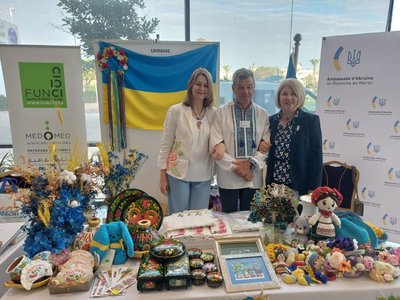
Ukraine holds exhibitions and charity fairs in Morocco to display its cultural heritage. Recently, for example, the collection of towels by Cherkasy craftswoman Oleksandra Telizhenko was presented in major cities of the country. According to the embassy, at the last event dedicated to the diversity of world cultures, the Ukrainian team raised over USD 800 for the sale of traditional souvenirs and products. All the money, according to the organizers of the fair, went to the charity fund of the Princess of Morocco.
The "Grain from Ukraine" program is an example of Ukraine’s ability to support partners in important areas, says Ambassador Serhii Saienko. In particular, this demonstrates to the Moroccan society, political, trade, commercial and scientific circles that even during the war, Ukraine retains intellectual, food and agricultural potential.
Despite Moscow’s efforts to discredit Kyiv, Ukraine is fulfilling its contract obligations and at the same time is striving to become a country that will quickly recover from the war, the ambassador adds.
"Ukraine continues to prove [to Morocco] that it is an important factor in stability and security in the Black Sea and Mediterranean region," Ambassador Saienko noted. "Its role as a partner for Europe is key, and European countries support Ukraine for peace, security, and recovery. Investments in Ukraine’s defense, security, and recovery will contribute to its rapid return to the world stage as a strong and reliable player."
Russia dominates the information space of many African countries where it conducts military operations. However, according to the National Democratic Institute for International Affairs, the Kremlin has neither the financial nor the military power to provide African partner governments with anything more than bot farms, weapons, and regular educational campaigns.
Morocco is trying to remain neutral on the issue of the Russian-Ukrainian war, but the war has affected this African country. In 2023, the World Bank reported that the inflation rate in Morocco in December 2022 was 8.3%. The international financial institution linked this data to the war in Ukraine.
"The prices of raw materials have caused significant inflation, which has affected the entire population, especially the middle class and the poor," said Naufel Belhadj, a professor of economics at Hassan II University in Casablanca.
However, according to Middle East Eye analysts, the financial crisis caused by the full-scale war in Ukraine will not force Moroccans to launch an information campaign against Russia, as this can worsen Morocco’s economic prospects and long-term relations with Moscow.