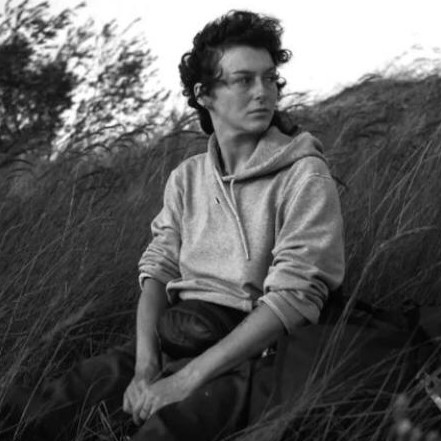

Artist and curator Viacheslav Mashnytskyi, who remained in Kherson after the occupation of the city, went to pro-Ukrainian rallies and tried to preserve the collection of his museum, disappeared. Crimean street artist Bohdan Ziza, who splashed the yellow and blue paint on the building of the Yevpatoria city administration captured by the Russians, was "sentenced" by Russia to 15 years in prison. Theater director Anatolii Levchenko, who staged Ukrainian plays in Mariupol, spent almost 10 months in the Russian captivity.
There are dozens of such stories. They tell how Russia kills, kidnaps, and captures artists in the occupied territories because they refuse to cooperate, resist, and most importantly, because they represent Ukrainian culture. "I just wanted to stage plays by Ukrainian playwrights," says one of our characters.
Culture is an important component of identity, which the Russians are trying to destroy in the occupied territories in the first place. Suspilne tells the stories of Ukrainian artists who resisted this.
Viacheslav Mashnytskyi: "Our land does not let them in"
The Kherson artist and curator went missing in October 2022 during the occupation. His family and friends are trying to find out what happened to him and are continuing his work.
In one of the videos that Viacheslav Mashnytskyi posted during the occupation, he says, "I would like to make visible the things that are invisible". From the time when the artist returned to his native Kherson in 2002 and until his disappearance in October 2022, he was fulfilling this task — he was making the contemporary Kherson art visible. "Viacheslav was constantly generating ideas, constantly wanted to see something new, we traveled a lot in Kherson region — both by car and on boat. He was curious about the world and about life, and inspired others with this," says Oleksandr Yevstafiev, a friend of the artist.
Viacheslav Mashnytskyi was born in Kherson in 1964 in the family of artist Valerii Mashnytskyi. He studied in Odesa and Kyiv, worked for some time in the capital of Ukraine and in Moscow, and returned to Kherson in 2002. In two years, together with painter Stas Voliazlovskyi, he founded the Charitable Foundation named after artist Polina Raiko, which popularizes her legacy and supports local creative initiatives. He converted his apartment into a gallery, which later became the "Museum of Contemporary Art Kherson".
"Viacheslav demolished the interior wall between the rooms and the corridor. Artists just painted on the walls and that was the first exhibition," says Hanna Mashnytska, Viacheslav’s wife. "Viacheslav understood that it was sometimes difficult for me to live in a museum, but he said, "We have such a mission, we ourselves are exhibits". This museum was his territory. That is why he did not leave the city after the occupation — he had to take care of it."
When the Russian army entered Kherson in 2022, Mashnytskyi refused to take out the museum collection. He believed that the less attention he attracted, the more likely the occupiers would not pay attention to him. At that time, the collection included the works of Stas Voliazlovskyi, Polina Raiko, representatives of local naïve art, and members of the Kyiv Parkomuna.
"We went to rallies on Heavenly Hundred Square. When a man with a Ukrainian flag climbed onto a Russian armored personnel carrier, Viacheslav said, "Victory is also a kind of art". He was waiting for the liberation of Kherson and used to say, "I see they are not for long here. Our land does not let them in; the ground is shrinking beneath their feet. I want to see them running away from here". Viacheslav went missing less than a month before the liberation. While Russian troops were in Kherson, Mashnytskyi spent most of his time in his summer cottage on Great Potemkin Island. The artist’s wife says that atmosphere there was not so oppressive as in the city with its checkpoints, armed occupiers and Russian flags. "Viacheslav loved this southern culture of summer cottages. A boat, motor, tackle, stove. He liked to go fishing, to salt and dry fish, to make apple juice and wine. He had a rest there, "rebooted" himself. It was even more important during the occupation. In the summer, he brought a projector there and showed films for children. He wanted to be as far as possible from the occupiers who had already visited him."
The occupation authorities offered Viacheslav to take one of the leading positions in the field of culture. "Viacheslav refused and said he had other things to do," says Hanna.
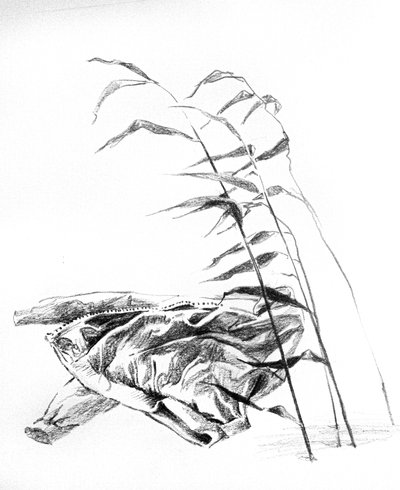
On October 17, 2022, Mashnytskyi stopped responding to messages, and his wife was alarmed. The next day she went to the summer cottage. That day, Oleksandr Yevstafiev wrote on the social media about the disappearance of his friend, "Today, outer clothing with traces of blood and an overturned table were discovered in Viacheslav’s summer cottage. The "Dnipro" boat and the engine for the "Suzuki" boat are missing."
His friends started a search, and Hanna Mashnytska went to the Ukraine-controlled territory to file a report about the disappearance of her husband. The investigation is ongoing. Meantime, Viacheslav’s friends take care of his collection and continue what he started: they hold exhibitions, released a catalog for the 20th anniversary of the museum founded by Mashnytskyi, and exhibit Viacheslav’s works. They say, "Wherever he is now, Viacheslav is here!"
"It is so difficult to talk about all this," says Hanna. "Viacheslav turned the artistic life of Kherson upside down, but he influenced my life even more. He is an amazing person. With each month, the hope is vanishing, but I still hope Viacheslav is alive and we will find him, he will return. Right now, we just want to find out what happened in the summer cottage."

Bohdan Ziza: "I acted according to my moral beliefs"
The Crimean artist was "sentenced" to 15 years in prison for splashing the yellow and blue paint on the door of the city administration building in occupied Yevpatoria.
On May 16, 2022, in Kyiv, Oleksandra Barkova was browsing social media and saw a photo of the city administration in occupied Yevpatoria splashed with the yellow and blue paint. She sent this photo to her cousin Bohdan Ziza who lived there. "I wrote to him, look, you have partisans there," recalls Oleksandra.
Her messages remained unread for several days. Then she entered her cousin’s name into the search engine and found a video in which Bohdan confessed to what he did in Yevpatoria. "It was a staged video from a propaganda channel. It was obvious that Bohdan had been tortured. I was so shocked that I kept writing to him as if he could answer. I could not believe that he had done it."
Bohdan Ziza was born in Yevpatoria. He lived with his mother until he was 12 years old, after that, he was raised by his grandmother. He became a street artist. He painted graffiti on social topics. After his "arrest", some of his graffiti, such as "Orphan" on the wall of one of the houses in Yevpatoria, were included into his "case".
"When Russia annexed Crimea, Bohdan was 19 years old. He did not support the occupation, but his grandmother was his only relative, he did not abandon her and stayed," Oleksandra says. Before the full-scale invasion, Bohdan recorded a video with an anti-war poem and posted it on the Internet.
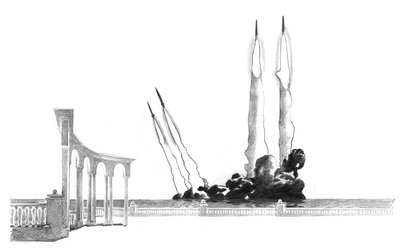
"He worried about everything that Russia was doing in Ukraine. He told me that he went for walks to the sea, near which he grew up and which he loved, and saw how missiles were launched from there targeting Ukrainian cities. He wrote that he could not bear the fact that they were launching missiles that were killing people," says Oleksandra. "After the news from Kyiv region (from the liberated Bucha — ed.), he became apathetic. In addition, he had conflicts with his grandmother because she supported Russia. I think that in the depressive condition, he impulsively decided to do what he did."
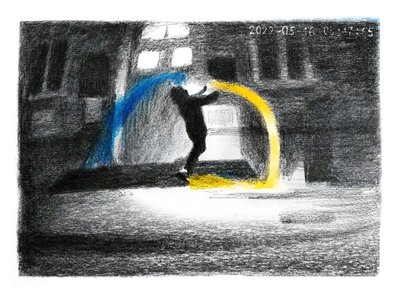
On the morning of May 16, 2022, Ziza splashed the yellow and blue paint on the door and facade of the Yevpatoria city administration and threw a Molotov cocktail at it. He was detained the same day and found "guilty" of "discrediting the Armed Forces of Russia", and later the FSB announced that Ziza was being investigated for preparing a terrorist attack. He spent almost a year in the Simferopol pre-trial detention center. In early June 2023, a military "court" in Russian Rostov-on-Don sentenced Ziza to 15 years in prison.
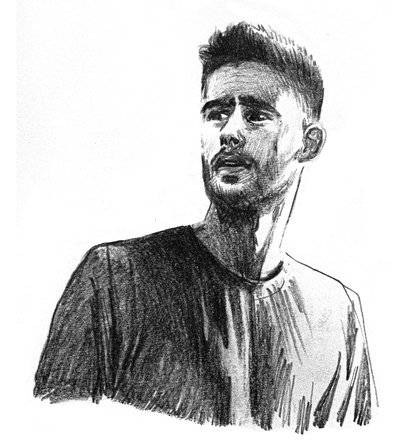
In his final word in the court trial, he said, "I am sorry that I went too far and my actions led to the accusation of terrorism. I am sorry that my grandmother will be left without the care that she needs. I am sorry that I cannot help my loved ones. As for the rest... I acted according to my moral beliefs."
Bohdan Ziza is currently in prison in the Russian city of Vladimir. Human rights defenders call his case politically motivated and consider him a political prisoner.
Oleksandra says that before Bohdan’s arrest, she was not interested in the topic of political prisoners, but after that, she began to read a lot about it. The 15-year court verdict did not come as a surprise to her, because she already knew that Crimea residents accused of "terrorism" are sentenced to such or even longer terms.
"To fight for Bohdan is not easy. Civilians are practically not swapped. He is not ill, he has no children, so there can be no mitigating circumstances," she says. "However, we organize various events, in which we emphasize that Bohdan is an artist and that it was an artistic protest action."
On August 23, 2022, "Ukrzaliznytsia" railway operator launched the "Train to Victory", the carriages of which were painted by Ukrainian artists. One of them was painted in honor of Bohdan Ziza.
"After Russia released Nariman Dzhelyal (on June 28, Ukraine returned from captivity Nariman Dzhelyal, the deputy head of the Mejlis of the Crimean Tatar People — ed.), we have hope again," Oleksandra says. "Bohdan and Nariman were in the neighboring cells in Simferopol. This is very painful history; Nariman became his friend and mentor there."
Bohdan is trying to resist in prison. After the verdict, he announced a 17-day hunger strike, demanded to release all political prisoners and to renounce his forcibly imposed Russian citizenship. He speaks the Ukrainian language on principle.
"It is a mystery to me how he can have so much optimism and faith, especially in the Russian prison where he is tortured. I am proud of Bohdan. He is an artist, not a terrorist. I believe that he will be returned sooner than in 15 years," says Oleksandra.

Anatolii Levchenko: "I spent hours telling them the content of my performances"
The theater director from Mariupol spent 10 months in the Russian captivity. He was accused of extremism, in particular for Ukrainian performances.
Before the full-scale invasion, Anatolii Levchenko was preparing the premiere of the comedy "Do you see the light at the end of the tunnel?" The first night had to be on February 25, 2022.
"This is a Ukrainian play, it was written by Neda Nezhdana. From 1994 to 2020, I worked in the Mariupol Drama Theater. It was one of the three theaters in Ukraine that had the official name of a "Russian theater". And Mariupol had already experienced the occupation [in 2014]! I was advocating to remove the word "Russian" from the title and to start staging plays by Ukrainian playwrights," Levchenko says. "When I became the main director, I staged two fairy tales in Ukrainian, the play "Glory to the Heroes!" and a poetic composition about poets Stus and Sosiura. Then my contract was not renewed. By the way, the director of the theater currently works for the occupiers."
After that, Levchenko founded his own Ukrainian theater. "It was on the Peace Avenue, next to the Freedom Square, which is symbolic, because Mariupol currently has no peace, no freedom, and no Ukrainian theater. We staged a play about the Holodomor, conducted concerts for the military, and arranged nativity scenes. We had an educational repertoire," the director says.
In Mariupol, he lived near the drama theater with his wife, 92-year-old mother-in-law, and autistic son. "At the beginning of March, the Russians began to attack the city center starting exactly from our block. For several weeks there were battles, we saw tanks shelling houses," says Anatolii. "My mother-in-law died soon and I buried her in the yard."
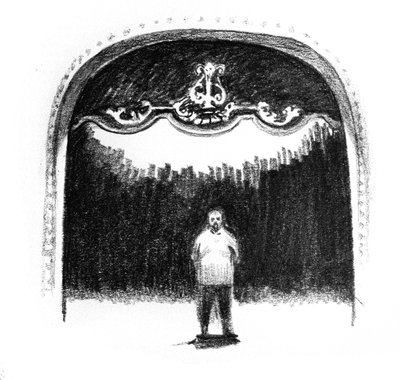
In May, the Levchenko family decided to leave, but for this, they had to go through the filtration procedure. Anatolii says that there had been several reports about him earlier, but he was arrested right after the filtration, "May 20, 2022. I was at home with my son. The occupiers put a gun to my stomach, put a bag on my head, and took me away." The director was kept in Mariupol for several hours and then taken to Donetsk.
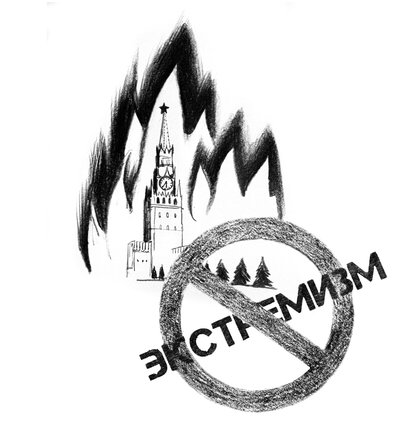
"They had a "conversation" with me there," says Levchenko. "They asked a lot of questions about the performances. For them, the very title "Glory to the Heroes!" was the evidence that I was an enemy. I spent hours telling them the content of the performances. They also asked whether I had participated in protest rallies. They were looking for discrediting evidence on the social media and they found it. Before the full-scale war, I posted a picture, in which a couple in love were looking at the burning Kremlin. They said it was extremism, terrorism. They said either you confess or we shoot you."
Levchenko spent almost 10 months in the Russian captivity — in two detention centers in Donetsk and one month in the "Isolation" prison. On March 9, 2023, he was released with the ban to leave the place of residence. In the summer, he and his family finally left occupied Mariupol.
Currently, Levchenko is staging plays in Kropyvnytskyi and Kyiv, and is writing his own play. "In captivity, I heard and saw a lot, talked with prisoners, except for those who called Ukrainians Nazis. I will use this experience in the play. It will not be a documentary play, but a fantasy one. However, I will put real experiences and thoughts into it," says the director.