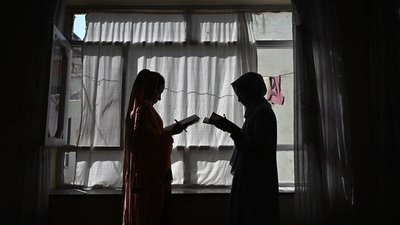
On the 15th of August 2026 the second Taliban rule turns its fifth anniversary in Afghanistan. Five years ago on that day the islamists seizured control over Kabul with little resistance. After returning to power, the Taliban imposed restrictions on women similar to those enforced between 1996 and 2001 during its first tenure.
In September 2021, for example, only boys were allowed to return to secondary schools, while the Ministry of Women's Affairs was replaced by the so-called Ministry for the Propagation of Virtue and the Prevention of Vice.
To mark the fifth anniversary of the Taliban takeover of Kabul, Suspilne collected the stories of four Afghan women who stayed in their home land. They have different professions, life stories and ambitions. Yet all of them have experienced first-hand how women's rights in the country have changed over the past five years.
«My husband had to accompany me on work trips as my mahram»
Masouda Jamshidi is a second-generation Afghan refugee. Her parents fled Afghanistan during the civil war and found refuge in Iran, where Masouda was born and raised. She earned a bachelor's degree in midwifery from Iran University of Medical Sciences and later a master's degree in midwifery, specialising in reproductive health, from Tarbiat Modares University in Tehran.
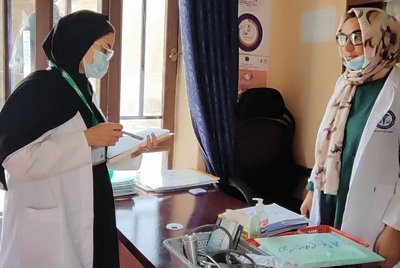
One of Masouda's greatest sources of inspiration was her grandmother. During Masouda's teenage years, her grandmother frequently travelled between Afghanistan and Iran to visit the family. Each time, she would tell Masouda stories about her life in Afghanistan and the hardships she had endured. Because access to healthcare was extremely limited, she suffered several miscarriages, life-threatening bleeding during pregnancy and lost several children to illness.
«She also told me stories about women in her village who died in childbirth because there were no professional healthcare workers or emergency medical services available,» Masouda tells Suspilne. «Her accounts of the suffering so many women endured affected me deeply. Those stories turned my curiosity into a sense of calling. They inspired me to dedicate myself to reproductive and maternal health.»
After completing her studies, Masouda returned to Afghanistan with the aim of helping women in underserved communities.
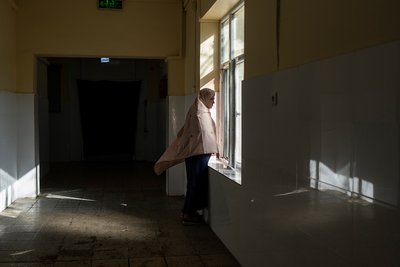
Masouda Jamshidi now works for the humanitarian organisation Concern Worldwide. Her responsibilities include improving access to primary healthcare in underserved and remote communities across Afghanistan.
Among other things, she oversees so-called Family Health Houses in remote communities where people previously had little or no access to basic healthcare. Masouda manages and provides technical supervision to teams of midwives.
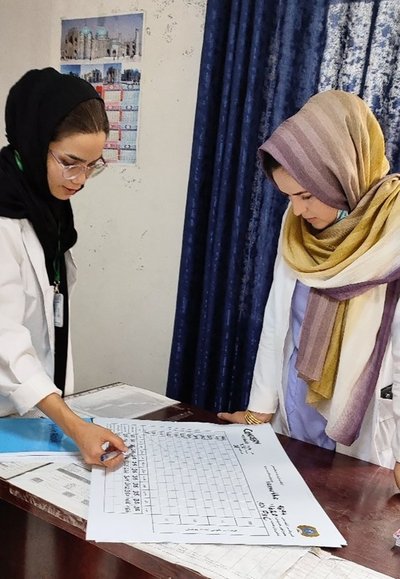
She says Afghanistan's healthcare system has become significantly more vulnerable since the Taliban returned to power. Many medical programmes have been scaled back or shut down altogether, while women's access to many medical universities and training institutions has also been restricted.
«Unfortunately, I have felt the impact of these restrictions both personally and professionally.
Women have been almost completely excluded from working in government institutions, which means they no longer have a meaningful voice in shaping health policy or decision-making.
«For a long time, I personally had to work remotely because I was not allowed to come into the office. And whenever I needed to travel for fieldwork or a business trip, my husband had to accompany me as my mahramIn Islam, this is a close relative of the opposite sex. In the presence of a mahram, a woman is not required to wear a hijab, and she is permitted to be alone with him and to travel.. That meant he had to take leave from his own job, and our family lost an important source of income simply so that I could continue doing mine.»
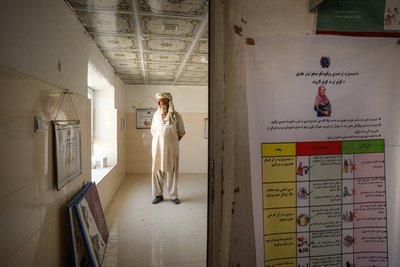
Another major problem in Afghanistan is limited access to childhood vaccination, especially for families living in remote and hard-to-reach parts of the country, Masouda says.
«In my view, one of the biggest challenges is the decline in international funding. As a result, mobile medical teams that used to regularly travel to 'white areas' have had to reduce their activities. Many children are therefore missing routine vaccinations.
«There is also a shortage of female vaccinators, which is particularly problematic in communities where cultural norms require women and children to be treated by female healthcare workers.»
She adds that awareness of vaccination remains low in Afghanistan, while misinformation and religious misconceptions about vaccines continue to circulate.
«As a result, Afghanistan remains one of the few countries in the world where polio has not yet been eradicated. Measles outbreaks also occur almost every year, leading to preventable illness and the deaths of many children,» the doctor says.
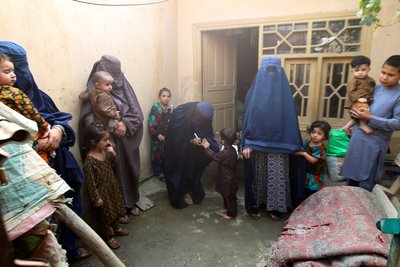
She keeps in her memory many stories of mothers fighting for their own lives and the lives of their children. But one incident from her work stands out. It occurred during a medical team's visit to the village of Hazarsamoch in Takhar Province, in northern Afghanistan near the border with Tajikistan.
«That time, I was visiting one of our Family Health Houses and stayed overnight at the clinic so that I could continue my journey the following morning,» she says.
During the night, a woman in labour was brought to the clinic. The midwife delivered the baby successfully, and shortly afterwards Masouda entered the delivery room to examine the mother and provide hands-on mentoring to the midwife.
During the examination, it became clear that the patient had developed severe postpartum haemorrhaging.
Masouda and the other specialists managed to stop the bleeding. Once the woman's condition had improved, her mother said:
«My son-in-law did not want to bring my daughter to the clinic because he did not want to pay for transport. He kept saying that, just like during her previous deliveries, she should give birth at home. I begged him and cried until he finally agreed to bring her here.»
Looking at her daughter, the woman said that if the birth had taken place at home, she would almost certainly have lost her.
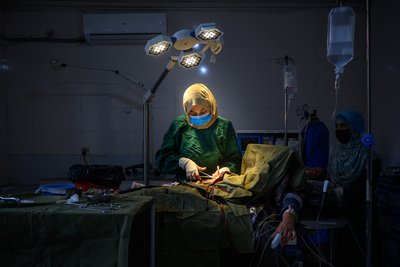
Later that same night, the patient's husband repeatedly insisted on taking his wife home immediately after the delivery. Masouda and her colleagues had to explain that the woman needed close monitoring because postpartum haemorrhage could recur and become life-threatening. Eventually, he agreed to let her remain at the clinic.
«That night will stay with me forever,» Masouda says. «It reminded me that in many parts of Afghanistan, the greatest obstacles to maternal survival are not only medical, but also financial, cultural and social. Sometimes the matter of life and death is if a woman is allowed to reach a hospital in time.»
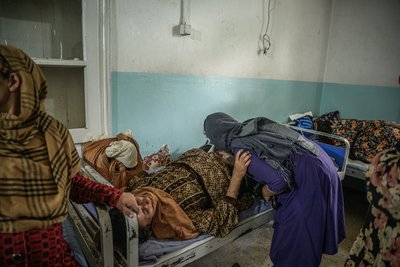
«Women and girls cried over questions that had no answers»
Manizha Bahra was born in Afghanistan, in the ancient city of Herat. She earned a bachelor's degree in sociology from Herat University and a master's degree from Erciyes University in Kayseri, Türkiye. She is now a PhD student at Ankara University.
She was the first woman in her family to move abroad to study at the university.
«This experience changed not only my own life, but also my family's understanding of girls, education and women's freedom. Later, many other families in our community became more willing to support their daughters keen to study at the university,» she says.
«That was where my interest in human rights began, especially women's rights. In Afghanistan, being a woman is not simply a matter of gender. It is an experience often defined by restrictions, exclusion from public life and a constant struggle for fundamental rights.»
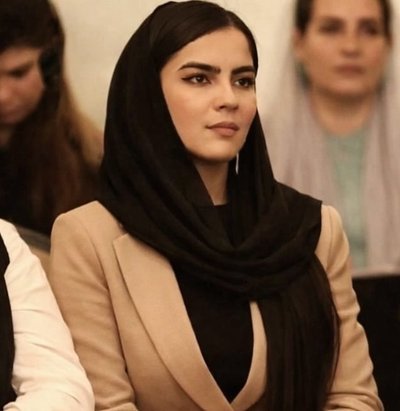
Manizha has teaching experience at both public and private universities in Afghanistan. Her courses have included rural sociology, research methodology, gender studies and the sociology of Afghanistan.
«In my view, a lecturer succeeds when they teach students to question even the professor's own ideas,» she says.
Manizha Bahra says Afghanistan's higher education system developed considerably over the previous two decades, but that progress reversed after the Taliban returned to power.
On the one hand, girls and women have systematically been barred from education beyond the sixth grade and from attending universities altogether. On the other, the Taliban-controlled education system has undergone structural changes both in its curricula and staffing, particularly through the dismissal of independently minded lecturers and academics. As a result, she says, higher education is moving towards decline.
«Afghanistan is the only country in the world where, for the past five years, girls and women have been systematically deprived of the right to education, employment and participation in political, economic and public life exclusively because of their gender,» she says.
«Stripping girls of their fundamental rights, especially the right to education, is not simply a deliberate violation of an individual right. It is the deliberate paralysis of an entire society and the obstruction of its path towards development and a better future.»
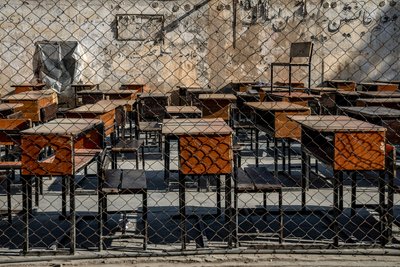
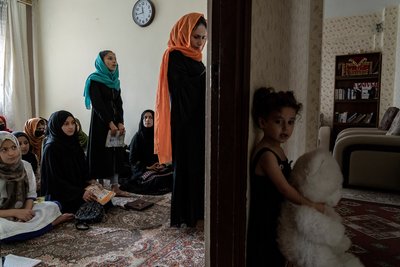
In addition to teaching, Manizha leads the Women's Reading Movement in Herat. It was established in the first months after the Taliban returned to power in August 2021.
«Uncertainty about my own future and the future of millions of girls like me weighed more heavily on my mind and spirit with each passing day. Eventually, I realised that amid all this darkness, there had to be some light. More precisely, I had to create it.
«I spoke to several like-minded people about organising secret reading gatherings. They agreed immediately. At first, our meetings were quiet and involved only a small number of people. Gradually, more and more women joined.»
Participants gathered twice a month. At each session, they discussed one book from either Eastern or Western literature, and at the following meeting they share their reflections, notes and interpretations.
«Our goal was never simply to read books. We wanted to create a space for dialogue, critical thinking and, above all, the preservation of women's intellectual identity. Books became a way for women to continue existing, even if secretly, beneath the surface of society,» Manizha tells Suspilne.
«Our first reading meetings began and ended in tears. Women and girls cried over questions that had no answers. Questions like: why should a woman or a girl be excluded from public life simply because of her gender? What is our crime?»
Despite all this, Manizha believes Afghanistan is gradually disappearing from the international agenda. She stresses that supporting the country's people is not the same as politically engaging with those currently in power.
«Supporting education, healthcare, scientific research, civil society, independent media and educational opportunities for young people is an investment in Afghanistan's future, not interference in its internal affairs,» she says.
«Afghanistan is not only about terrorism and migration. It is home to millions of people who want to live with dignity, receive an education, be free and have equal opportunities.»
«It felt as though life had suddenly become much smaller»
ParvizThe name has been changed at the subject's request for security reasons. is a young Afghan student and civic activist. She was born and spent her early childhood in the city of Kandahar in southern Afghanistan before later moving to Kabul.
Because of concerns for her safety, Parviz declined a video interview and agreed to answer our questions only in writing. She says that speaking publicly about the situation of women in Afghanistan may still put her at risk. We also don't disclose her full name.
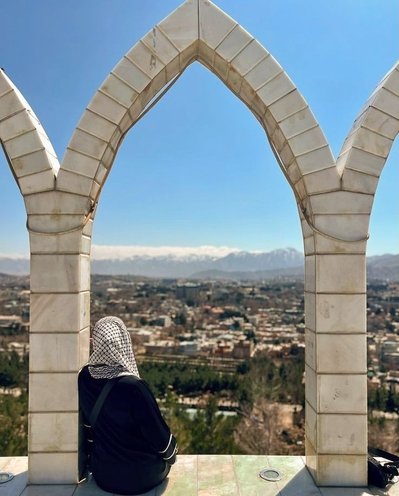
In 2021, when the Taliban returned to power in Afghanistan, Parviz was still at school, so the closure of schools to girls affected her directly.
«When girls' schools closed, I realised how quickly something ordinary could turn into a privilege. Instead of walking into a classroom every morning, I started studying online. It required much more discipline because there was no classroom atmosphere, no school activities and no sense of sitting next to your friends and learning together,» Parviz recalls.
The difference between the lives of girls and boys became impossible to ignore.
Boys were allowed to continue their education, while girls had to look for alternative opportunities or simply wait, not knowing when schools might reopen.
«The saddest part is that this difference has nothing to do with ability,» Parviz says. «Afghan girls are just as capable, ambitious and hardworking as anyone else. They simply have fewer opportunities to prove it.»
Yet the most significant changes were not always visible.
In the first months after the Taliban returned, a particular feeling set in.
«Life suddenly became much smaller. The places I could go, the plans I could make and even the future I imagined for myself — all of it changed in a very short time,» Parviz says.
She tried to carve out her own path. «I started looking for online learning opportunities, international youth programmes, ways to gain leadership experience and anything else that would allow me to keep developing».
Through those opportunities she met students from many different countries and realised that even if her physical world had become smaller, her intellectual world did not necessarily have to shrink.
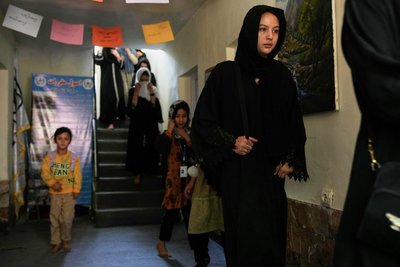
Parviz is now vice president of the civic organisation Afghan Girls in STEM, which creates opportunities for Afghan girls to study science, technology, engineering and mathematics.
«One of the things I value about the organisation is that it focuses on opportunities rather than limitations. We organise educational activities, mentorship opportunities and projects that encourage girls to continue studying technology, engineering and mathematics,» Parviz explains.
«I love seeing girls become more confident after taking part in our programmes. Sometimes all a person needs is someone else who believes in what they are capable of.»
In the future, Parviz dreams of becoming a pilot for medical evacuation or humanitarian missions. She says she is drawn to the idea that an aircraft can reach people in places inaccessible by road.
«I want to fly missions that help transport injured patients, deliver medicine and emergency assistance after natural disasters, and support communities that have become isolated or affected by conflict,» she says.
«For me, aviation is not simply about travelling from one place to another. It is a way of connecting people with hope at the very moment they need it most. Ten years from now, I hope to be looking out from the cockpit, knowing that every flight I make serves a purpose far greater than simply reaching a destination.»
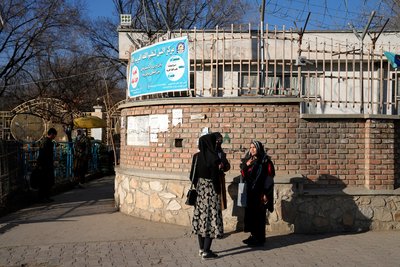
«Afghanistan has become a graveyard for our dreams»
Setara (the name is changed for security reasons) agreed to speak about the situation of women and the work of human rights defenders in Afghanistan only on condition of anonymity.
«I have to be honest with you: this work has cost us our peace, our safety and our lives. As a human rights defender who is still inside the country, I live in a nightmare. I have received horrific direct threats more than once. Every phone call makes my blood run cold,» she tells Suspilne.
Setara says that despite the bans, girls in Afghanistan are still trying to continue their education, though doing so is often far more difficult and dangerous than it may appear.
«It pains me to see the world romanticising 'secret schools', turning them into a beautiful story of resilience. The reality is much darker.
»Trying to study now is an act of desperation and danger. Yes, girls bend over books in dark, hidden rooms, while others try to join online classes through unstable internet connections and constant power cuts. But they do it with racing hearts and tears in their eyes.
«Every knock at the door sends a wave of panic through them. These courageous girls and their teachers risk imprisonment, torture and their own lives simply for the right to learn.»
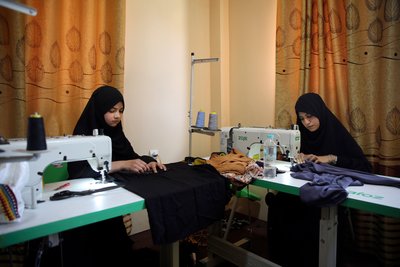
Setara says that much of what is happening in Afghanistan remains overlooked in international media. She points, among other things, to a sharp rise in suicides among young women and girls, as well as what she describes as «the deliberate hunting down of activists like me».
«The world sees the absence of active bombing and calls it 'peace', while remaining completely blind to the slow, violent suffocation of an entire society,» she says.
Reports of an increase in suicides among Afghan women have appeared in international media. In August 2023, the Turkish news agency Anadolu reported that according to NGOs' reports, suicide cases were significantly undercovered and could reach one hundred cases per month.
The woman we spoke to is now looking for a way to leave Afghanistan so that she can continue her human rights work without putting her life at immediate risk.
«I am searching for any opportunity, any embassy, any organisation that can provide me with support and protection so I can escape this hell on earth.
«Staying here means waiting for my own arrest or death,» she tells Suspilne.
«I need to leave Afghanistan so that I can breathe without fear and continue my human rights work loudly and resolutely on behalf of the millions of Afghan women and girls who have been brutally forced into silence».
According to the World Food Programme, 4.9 million women and children in Afghanistan require treatment for malnutrition.
As of 2025, approximately 2.2 million Afghan adolescent girls had been denied access to secondary education because of the Taliban ban, according to UNICEF. Around 397,000–400,000 more girls are added to that number every year.
According to UN Women, nearly 78% of Afghan women aged 18–29 are not in employment, education or training.
According to UNHCR, as of July 2025, approximately 5.3 million Afghan refugees and asylum seekers were registered in neighbouring countries. Nearly 90% of Afghan refugees are hosted by Iran and Pakistan.