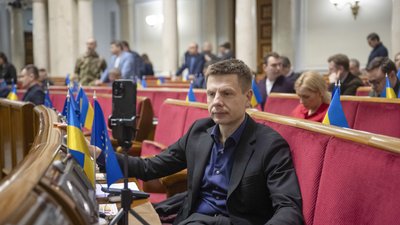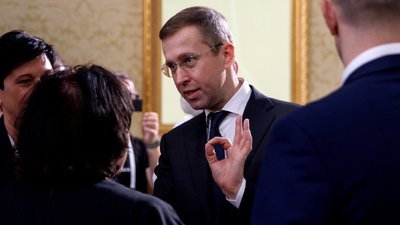

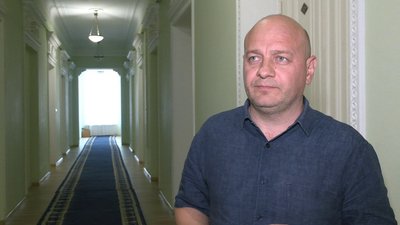
In 2020, the government began reforming the alcohol industry. The property of the state monopolist, “Ukrspyrt”, was put up for sale, and private businesses were allowed to produce alcohol. According to the government, such changes had to increase production and export potential, create new jobs, and bring the market out of the shadows. The first years of demonopolization did not bring the market out of the shadows, which was officially stated by tax officials. However, the market is now controlled not by state-owned enterprises, but by seven business groups that include people close to members of parliament, government officials, law enforcement officers, a fugitive oligarch, and former tax officials.
The Suspilne investigative editorial office has investigated who bought out state-owned distilleries, whom the tax authorities caught hiding the real volumes of alcohol production in 2023, and what is happening with the shadow alcohol market now.
What was the reform supposed to do?
The government motivated the reform in the alcohol industry by the fact that up to 60% of alcohol production was “in the shadow economy”, which caused 8-10 billion hryvnias of budget losses each year. At the same time, the state was spending up to 100 million hryvnias per year on the maintenance of distilleries, the then head of the State Property Fund, Dmytro Sennychenko, reported in 2020.
The parliament adopted amendments to the legislation, and the government developed a program for implementing the reform, which was to be in effect until the end of 2023 and provided for an increase in the volume of production and sales of ethyl alcohol by 20%, bioethanol by 10%, and distillates and alcoholic beverages by 15%. It also aimed to reduce the “shadow” market for ethyl alcohol and to create 500 jobs.
On July 1, 2020, a law came into effect that allows all enterprises with an appropriate license, regardless of ownership, to produce alcohol. Previously, only state-owned distilleries had this right.
In the same year, the government began an active sale of the assets of the “Ukrspyrt” state enterprise and distilleries that were previously part of the state company of the same name. The privatization was carried out through the State Property Fund of Ukraine.
How many Ukrspyrt facilities have already been sold?
Before privatization, Ukrspyrt had 41 “places of operation” and 37 property complexes. As of 2020, most of them had not been operating for several years.
In the autumn of 2020, the State Property Fund of Ukraine sold the first distillery – “Nemyrivskyi” in Vinnytsia region. It was purchased by LLC “LVN Limited”, which owns the Nemiroff trademark, for 55 million hryvnias excluding VAT.
By the end of 2021, the State Property Fund had sold 30 distilleries, raising a total of 1.7 billion hryvnias. The sales process continued even after the start of the full-scale war.
In total, 56 Ukrspyrt facilities were sold as of spring 2025. The State Property Fund informed Suspilne that the country’s budget received 2 billion 753 million hryvnias (also excluding VAT). We should add that the facilities were sold without land.
Where was illegal alcohol produced?
In the spring of 2023, when the privatization had already been underway for almost three years, Danylo Hetmantsev, the chair of the Verkhovna Rada of Ukraine Committee on Finance, Tax and Customs Policy, estimated the loss of revenue from three excisable goods – namely alcohol, fuel, and tobacco – at $1 billion at least.
According to Hetmantsev, despite a significant increase in excise tax, the amount of illegal alcohol on the market increased, and some producers were controlled by Russians.
According to the “Ekonomichna Pravda” publication, tax officials analyzed and monitored the activities of distilleries and found that as of May 1, 2023, there were at least seven operating groups of producers, which were noted for the production and sale of unaccounted alcohol:
1. Kharkiv group (“Ukrspetsspyrt”, “Karavan”, “Artemivka” companies), production volume of unaccounted alcohol – 1,500 tons per month;
2. Vinnytsia group (“Bershad Lux” company and Yurkovetskyi distillery), production volume of unaccounted alcohol – 500 tons per month;
3. Kyiv group (Stadnytskyi distillery, “Stal Group Energy” company), production volume of unaccounted alcohol – 500 tons per month;
4. Rivne group (Zirnenskyi and Kholmynskyi distilleries, “Zakhid Distillery” company), production volume of unaccounted alcohol – 150 tons per month;
5. Lviv group (Storonybabskyi distillery, Strutynskyi distillery, Rava-Ruskyi distillery, “Guralnia Brunytskykh” and “West Way” companies), production volume of unaccounted alcohol – 150 tons per month;
6. Kirovohrad group (Mezhyritskyi Vitamin Plant), production volume of unaccounted alcohol – 100 tons per month;
7. Zhytomyr group (Chudnivska branch of Zhytomyr distillery), production volume of unaccounted alcohol – 100 tons per month.
The Suspilne investigative editorial office analyzed who privatized the factories mentioned in the tax report.
Kharkiv group: alcohol magnate Valeulin
According to tax authorities, the “Kharkiv group” had the largest amount of unaccounted alcohol. According to prozorro.sale, the Karavanskyi and Artemivskyi distilleries were sold at the beginning of the reform in 2020-2021. The first was purchased by “Revites” LLC and the second – by “Borky Solar” LLC. Both companies belong to the financial and industrial AES Group, which operates in the oil refining, alcohol, energy, road construction, transport, research and development, and other sectors.
In 2023, “Borky Solar” LLC disappeared from the list of founders of the Artemivskyi distillery. Currently, the company belongs to the Honorary Consul of Armenia in Kharkiv Armen Aslanyan (75%), former MP Ihor Kotvitskyi (24%), and Misak Aslanyan (1%). According to the “Chesno” project, Ihor Kotvitskyi is affiliated with former internal minister Arsen Avakov.
At the same time, the Artemivskyi distillery is still listed as an asset on the AES Group website. The YouControl analytical system lists Kostiantyn and Roman Valeulin and Milytsa Volkova as key individuals in the group.
Milytsa Volkova owns registered shares in 8 companies related to AES Group. “Ekonomichna Pravda” wrote about her connection with Oleksandr Skakun, who until recently was the first deputy head of the Kharkiv Regional State Administration.
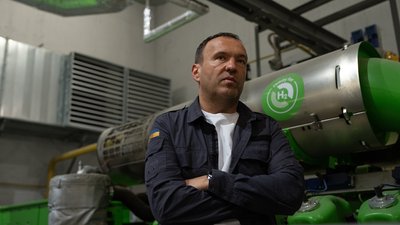
Kostiantyn and Roman Valeulin are Kharkiv businessmen from Zaporizhzhia. Kostiantyn is the president of AES Group, which includes distilleries.
Vinnytsia group: sanctioned Zhevago
According to “Ekonomichna Pravda”, “Bershad Lux” company and Yurkovetskyi distillery were in the second place in terms of the amount of unaccounted alcohol in 2023.
In October 2020, the Bershadskyi distillery was purchased by “Aqua Solar Invest” LLC for 23 million 767 thousand hryvnias including VAT.
The beneficiaries of “Aqua Solar Invest” are Kyiv residents Oleksandr Yaroshenko, Olena Smirnova, and Liliia Astapova.
Olena Smirnova was also mentioned as the founder and director of “Revites” LLC, which is part of the AES Group owned by Volkova and Valeulins and which purchased the Karavanskyi distillery in Kharkiv region.
The actual activities at the Bershadskyi distillery are carried out by “Bershad Lux” LLC. It is managed and owned by Iryna Yelfimova. The YouControl system indicates that she is also the company’s accountant.
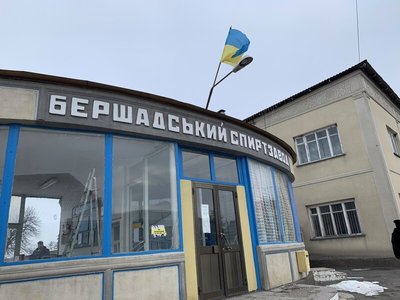
Both “Aqua Solar Invest” and “Bershad Lux” were involved in criminal proceedings. According to investigators, the directors of these companies organized the illegal production of ethyl alcohol without registration, without paying excise tax and mandatory payments, using forged accounting documents. Despite the fact that criminal proceedings were opened in March 2021, there has been no verdict in the case yet.
The property of the Yurkovetskyi distillery, located in Mohyliv-Podilskyi, Vinnytsia region, was privatized by “Timecall” LLC in the autumn of 2022 for 40 million 800 thousand hryvnias.
The company is officially registered with Kyiv resident Oksana Zakharova. According to the law enforcement, as stated in the ruling of the Pecherskyi District Court of Kyiv, “Timecall” was used to re-register a significant part of the Ukrainian business of the sanctioned former MP and businessman Kostiantyn Zhevago. At the request of the prosecutor, the assets of “Timecall” LLC were arrested.
In 2021 and 2022, “Timecall” also purchased the Uladivskyi distillery in Vinnytsia region and the Borshchivskyi distillery in Ternopil region. All purchased distilleries were among the businessman’s arrested assets.
As a reminder, Ukrainian law enforcement agencies believe that Kostiantyn Zhevago is involved in the embezzlement of $113 million from the bankrupt “Finance and Credit” bank. All seized property of Zhevago and companies related to him are currently under the management of the Assets Tracing and Management Agency.

Two unfinished construction sites of the Dovzhotskyi alcohol production and storage facility in Khmelnytskyi region were also seized from Zhevago’s assets. “Timecall” privatized them for two million hryvnias in February 2023.
The property of the Dovzhotskyi distillery itself was bought out in 2020 by another company within the sphere of influence of Kostiantyn Zhevago – LLC “SKN “Modern Commercial Real Estate”. It also purchased the Ivankivskyi distillery in Cherkasy region, Thorivskyi distillery in Kyiv region, Voyutytskyi distillery in Lviv region, and Vyshniakivskyi distillery in Poltava region. In total, LLC “SKN “Modern Commercial Real Estate” paid about 300 million hryvnias for the five distilleries.
The company’s assets were also arrested and transferred to the Assets Tracing and Management Agency.
In total, the companies that law enforcement agencies associate with Kostiantyn Zhevago privatized 10 Ukrspyrt facilities.
Kyiv group: Ukrspyrt ex-employee
According to prozorro.sale, the Stadnytskyi distillery, located in Bila Tserkva district, was purchased at an auction in December 2022 by “Greenfil LTD” LLC for almost 82 million hryvnias.
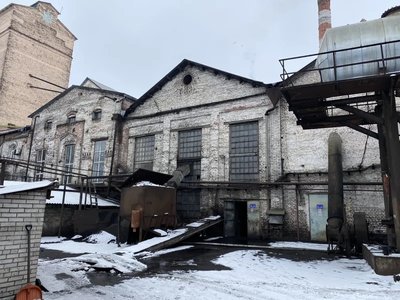
“Greenfil LTD” is registered in Dnipropetrovsk region, its owner and manager is Alla Serikova from the town of Novomoskovsk. The main type of activity is leasing and operation of own or leased real estate.
At the auction, the company’s offer was smaller. However, “Wind Dance” LLC, which offered 40 million hryvnias more, refused to participate.
Now, the investigators from the Main Directorate of the National Police in Kyiv region are conducting a pre-trial investigation into this auction, as they believe that the sale likely took place at an understated price.
The Antimonopoly Committee established a conspiracy between “Greenfil LTD” LLC and “Wind Dance” LLC in August 2024. The decision of the Antimonopoly Committee states that in fact, economic activity at the purchased distillery is carried out by “Global-Budtrans” LLC. It belongs to the former employee of Ukrspyrt Mykola Sahan.
The companies appealed to court regarding the Antimonopoly Committee decision.
The second company from the list of the “Kyiv group” – “Stal Group Energy” LLC – in 2021 bought the Lypnytskyi distillery in Korostyshiv district of Zhytomyr region and the treatment facilities of this distillery.
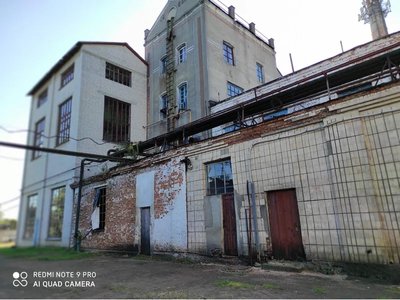
The company is currently owned by Dmytro Chumak from Kyiv, and is presumably managed by his father Yurii Chumak. Until March 2020, the founders of the company also included Leonid Bierkov from Lviv and Viktor Bilyk from Luhansk. We will mention Leonid Bierkov below in the “Lviv group”.
Rivne group: former “Party of Regions” members
There are two distilleries in Rivne region: Shpanivskyi, which was privatized back in 2015, and state-owned until recently Zirnenskyi.
The property of the Shpaniv distillery was divided between LLC “Tedvin Ukraine” and LLC “Rivne Food Company”. In 2017, the Rivne investigative journalistic agency “Fourth Power” linked the new owners of the Shpaniv distillery with the “vodka king” Serhii Chebotarov through his business partner Andrii Akimenko. The article stated that Chebotarov was connected with Viktor Yanukovych’s “family” and was responsible for the circulation of unaccounted alcohol, vodka, and tobacco.
According to “Ekonomichna Pravda”, in 2023, tax authorities included LLC “Zakhid-distillery”, which is engaged in distillation, rectification, and blending of alcoholic beverages, in the “Rivne group”. The court’s decision on the company’s appeal against the cancellation of its license to produce alcohol states that “Zakhid-distillery” actually carries out economic activities at the Shpanivskyi distillery. This company is equally owned by Kyiv residents Ruslan Astakhov and Oleksandr Shmahora.
The Zirnenskyi distillery was put up for privatization in May 2024. It could have been sold for 60 million hryvnias, but the company “Businessfactorservice”, which offered such a price, refused to buy the property. The contract was signed with LLC “Technokomplektservice”. The purchase price was 36 million hryvnias, excluding VAT.
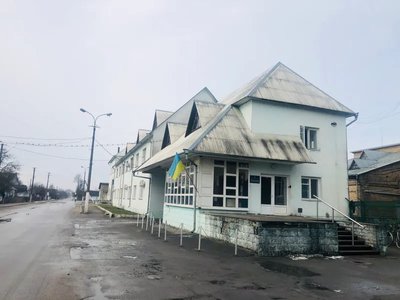
“Technokomplektservice” is registered in Kyiv, the owner is the already mentioned Ruslan Astakhov.
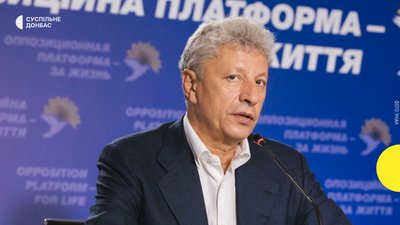
According to the YouControl analytical system, Astakhov is the head of the banned party “Opposition Platform – For Life”. In March 2025, Astakhov replaced MP Yurii Boiko in this position. During 2007-2012, Ruslan Astakhov was Boiko’s assistant on a voluntary basis.
Thus, distilleries in Rivne region are actually owned by Ruslan Astakhov, the leader of the banned party “Opposition Platform – For Life”. We should add that since 2022, the party has been in a state of suspension, and Ruslan Astakhov is also its liquidator.
Until August 2019, the director of the state-owned Zirnenskyi distillery was Serhii Lytvynenko, now a member of the Verkhovna Rada from the “Servant of the People” party. After Lytvynenko, the distillery was managed for some time by his son Anton Lytvynenko.
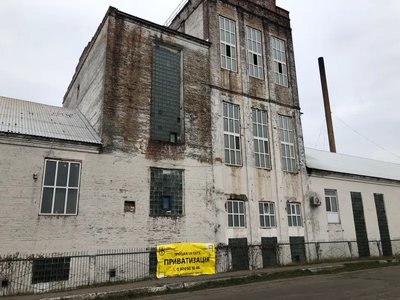
According to the tax authorities, the Rivne group, which resorted to illegal alcohol trafficking, also includes the Kholmynskyi distillery in Chernihiv region. The distillery’s property was bought in the spring of 2025 by the consulting company “Terminal Frost”, which was registered in Kyiv.
The company is owned by Anastasiia Bashtova from Horlivka, and she is also listed as the company’s accountant. Bashtova also owns and manages the pharmaceutical company “Pharm Plast”. Until 2021, the woman was one of the ultimate beneficial owners of “Burprom”, which belongs to the group of companies of Mykola Rudkovskyi, and “Halbyn Holding”. Both are related to amber mining in Rivne region. Mykola Rudkovskyi was the minister of transport and communications, when Yanukovych was the prime minister, and “Party of Regions” MP in 2012-2014.
Lviv group: former tax officials
The “Lviv group”, which was mentioned for unaccounted alcohol in 2023, includes the Storonybabskyi, Strutynskyi, and Rava-Ruskyi distilleries, “Guralnia Brunytskykh” and “West Way” companies.
The property of the Storonybabskyi facility, located in Zolochiv district, was purchased at the highest price. In February 2023, Lviv-based “Yes Oil” LLC paid 142 million hryvnias (excluding VAT) for it.
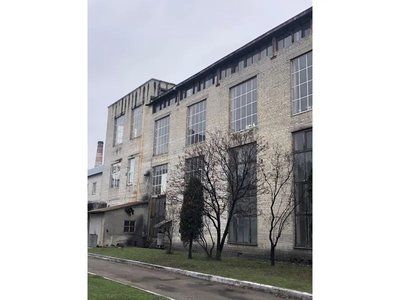
After purchasing the facility, LLC “Yes Oil” changed its name to “Storonybabskyi distillery” and added the activity “distillation, rectification, and blending of alcoholic beverages”.
The company was registered in 2021 by Lviv resident Andrii Lushchyk. Until 2017, a man with the same name and surname worked as a senior operational officer for especially important cases of the Main Department of the State Fiscal Service of Ukraine in Lviv region. It is within the powers of this body to control the production and circulation of alcohol and alcoholic beverages.
Strutynskyi facility was privatized by the “New It Solutions” company in October 2023 for 92 million 640 thousand hryvnias. The beneficial owner is Ivan Hrytsyshyn. A man with the same name and surname was also an operational officer for especially important cases of the Main Directorate of the State Fiscal Service in Lviv region until 2017.
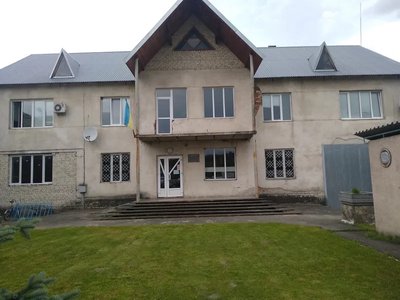
Based on its connections, the YouControl system attributes the Strutynskyi distillery to the Dribniuk family group of companies, whose enterprises are engaged in consulting, production of aircraft and spacecraft, as well as finance and real estate.
The conditional “Lviv group” also includes the Rava-Ruskyi distillery. The property of this distillery was privatized in 2021 for 38 million hryvnias by the company “Nashe Miastse”. The ultimate beneficial owner is Mykhailo Talama, who owns 66% of the ownership share. A man with the same name worked at the Main Directorate of the State Fiscal Service in Lviv region until 2021.
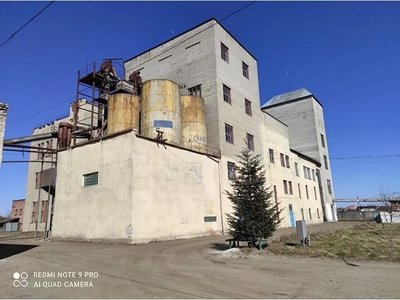
The only competitor in the competition to purchase the Rava-Ruskyi distillery was “West Way” LLC, which did not even try to win. The company also owns distilleries that it privatized in 2020 and 2021: Khorostkivskyi in Ternopil region and Lutskyi in Volyn region.
“West Way” LLC belongs to Leonid Bierkov, who was a co-founder of “Stal Group Energy”. As a reminder, this company privatized the Lypnytskyi distillery.
“West Way” is headed by Mykola Cherkhavyi. The man with the same name – the former head of the commercial policy department of the state-owned enterprise Ukrspyrt – is accused of embezzling funds and causing losses to the state-owned enterprise of 55 million hryvnias. The case has been under consideration by the Supreme Anti-Corruption Court for almost a year.
The Velykoliubinskyi state distillery in Lviv region was purchased by the company “Opt Mania” in 2021 for 66 million hryvnias including VAT. The company “Guralnia Brunytskykh” mentioned in the “Lviv group” is operating in its place.
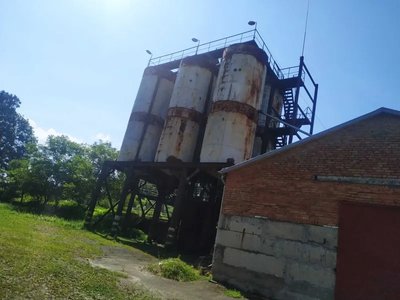
The company has 9 owners, 30% of the authorized capital belongs to the company from the group of companies of Lviv businessman Oleh Baliash “Spirit Management Company”, and 20% belongs to Leonid Bierkov’s LLC “West Way”. The remaining 50% was divided among Baliash’s business partners from Kyiv, Ivano-Frankivsk, and Sumy.
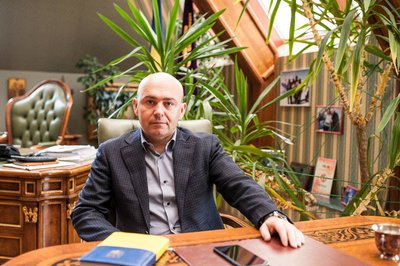
Oleh Baliash and his family’s companies operate in the banking, alcohol, and retail sectors. He is a co-owner of “Oxy Bank” and the “Hetman” distillery (which produces vodka under the “Hetman”, “Derzhava”, and “Pisnia” brands). Baliash also owns and manages a network of shopping malls in almost 10 regional centers. For example, in Kyiv it is the Smart Plaza Polytech shopping mall, in Lviv – Opera Passage.
Kirovohrad and Zhytomyr groups
The last two groups, in which the circulation of unaccounted alcohol was recorded in 2023, include the Mezhyritskyi Vitamin Plant (the so-called “Kirovohrad Group”) and the Chudnivska branch of the Zhytomyr distillery (“Zhytomyr group”).
The state-owned enterprise “Mezhyritskyi Vitamin Plant”, which is owned by PJSC “Ukrmedprom” – a company of the Ministry of Health, is not yet being prepared for privatization.
The Chudnivska branch of the state enterprise “Zhytomyr distillery” was part of the single property complex of the Zhytomyr distillery. The auction for its sale was held recently: the purchase and sale agreement was signed on May 13, 2025 with the company “SPK-Invest 2021”. The sale amount is 137.5 million hryvnias excluding VAT.
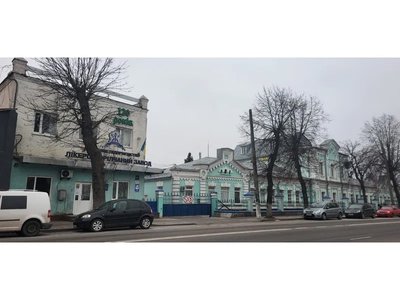
The winner’s last registered address is in the city of Dnipro, and the ultimate beneficial owners are Vasyl and Yevhen Astion.
As noted in YouControl, the Astion family group of companies is engaged in agriculture and real estate. In particular, the group includes Dnipro Agro Group, the main area of activity of which is the production, storage and sale of grain and oilseed crops.
Vasyl Astion was a member of the Dnipropetrovsk Regional Council from the pro-Russian party “Vidrodzhennia”. He ran for the Verkhovna Rada in 2019 with the “Opposition Platform – For Life” party, but was not elected.
The publication “Nashi Hroshi” called Vasyl Astion a friend of Andrii Smirnov, the former deputy head of the Office of the President of Ukraine, who is suspected of legalizing illegally acquired funds and accepting offers to receive a bribe in a particularly large amount.
The Astion brothers’ father, Mykola Astion, is a retired police major general. He was the head of the tax police in Sumy region from 2007 to 2011 and headed the Kyiv Department for Combating Organized Crime.
In early 2024, the Prosecutor General’s Office suspected the Astion brothers of evading taxes of over 61 million hryvnias. In March 2025, the Zhovtnevyi District Court of Dnipro closed the criminal proceedings due to the expiration of the pre-trial investigation period.
What is happening with the reform and the shadow alcohol market now?
At the Suspilne information request, the State Property Fund reported that 18 property complexes of distilleries, three separate places of operation and storage of alcohol, two unfinished construction sites, and one molasses processing plant remain non-privatized. All facilities are being prepared for sale.
When purchasing distilleries, the new owners undertook not to fire employees for six months, to pay off salary arrears and the debt to the budget as of the date of transfer of ownership.
The Suspilne investigative editorial office asked the State Tax Service and the State Property Fund whether the buyers of the distilleries had paid their debts to the state and employees.
The State Tax Service of Ukraine refused to provide information on tax arrears, citing martial law and the threat to the economic sector of the state budget. The State Property Fund responded only regarding single property complexes. It indicated that the buyers of the Zirnenskyi (Rivne region) and Korostyshivskyi (Zhytomyr region) distilleries did not pay the debts. The new owners challenged the debts in court. The buyers of the Shabalynivskyi distillery in Chernihiv region paid the debt in part. They were fined.
Regarding the 500 jobs that were supposed to be created as a result of the reform, the Ministry of Agrarian Policy, to which the State Tax Service forwarded our request, replied that it did not have such data because “the action plan does not provide for the task of reporting on job creation”.
We also asked the State Tax Service of Ukraine whether there has been a reduction in the “shadow” ethyl alcohol market since 2023 and, if so, what confirms this.
We did not receive a direct answer. The State Tax Service only noted that the amount of produced and sold alcohol and alcoholic beverages has increased in recent years, which may be confirmation that the shadow market has shrunk.
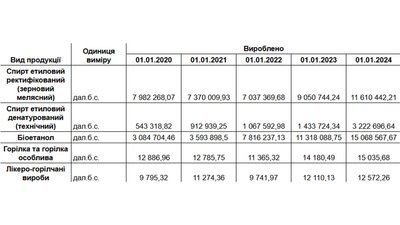
We also asked the State Tax Service what response measures (for example, penalties) the service applied to those distilleries for which the production of unaccounted alcohol and its sale were recorded in 2023, whether it re-inspected these distilleries in 2024-2025, and whether it recorded the “shadow circulation” of alcohol in Ukraine over the past two years.
To these questions, the State Tax Service replied that they do not have this information and should not have it, since “the issue of preventing the production and circulation of illegal alcohol, identifying criminal groups that may be involved in its production, does not fall within the functional powers of the State Tax Service”.
However, they added that in 2024 and the first half of 2025, 275 actual inspections of alcohol-producing enterprises were conducted, as a result of which UAH 27.9 million in financial sanctions were imposed and five licenses for the right to produce ethyl alcohol were terminated.
We asked Danylo Hetmantsev, chair of the Verkhovna Rada Committee on Finance, Tax and Customs Policy, whether, in his opinion, the alcohol market has been de-shadowed since the spring of 2023 and, if so, what contributed to this.
Mr. Hetmantsev assures that the privatization of distilleries has had a positive impact on the de-shadowing of the alcohol market in Ukraine:
– In fact, it is quite simple to track the behavior of a distillery with proper control by tax authorities. This is a real production facility that has its own performance indicators. It is the utilization rate of distilleries that is actually a key indicator of the shadow – if its values are minimal. For example, it was the case in peaceful 2021, when the average utilization rate of distilleries across the country was 60%. That is, in fact, all the remaining capacity worked in favor of the shadow. It fed it with shadow cash, and fed people with alcohol products of dubious quality.
According to Hetmantsev, in 2024, the official capacity utilization of distilleries was 87%. 29.85 million decaliters of alcohol were produced, which is 151% more compared to 2021.
– As a result of the de-shadowing of the activities of distilleries during 2023-2024, the production volumes of alcoholic beverages also came out of the shadows. Thus, in 2024, distilleries additionally paid 1.9 billion hryvnias to the budget. The exit of distilleries from the shadows in 2023-2024 was, in fact, the result of the high-quality work of tax authorities, says Hetmantsev.
We also asked Hetmantsev whether the circulation of illegal alcohol is still recorded in the seven groups of producers of unaccounted alcohol noted in 2023.
– Compared to the beginning of 2023, their activities are now more transparent. Some entities have stopped production, others have begun to show and declare volumes. In general, taking into account legislative changes, such groups will be forced to either work transparently or close down. Therefore, it does not matter now which groups and how many of them there are. Proper tax control is important, the chair of the committee replied.
The legislative changes mentioned by Hetmantsev in particular include the installation of meters for the produced volume of alcohol at all Ukrainian distilleries. A single electronic register of alcohol storage locations should also appear. Last year, the parliament also adopted a law according to which, starting in 2025, taxes for distilleries will be calculated based on their production capacity, and not on the volume of officially manufactured products. This should make unaccounted production meaningless.
We also asked for comment an expert who had been actively involved in promoting alcohol industry reform. After reviewing the material, he asked to remove his comment because the text mentions influence groups. However, we will briefly present his expert opinion, considering it important.
– On the market, “shadow alcohol” is conventionally called “two” or “second form”. The reform does not directly affect this situation. If someone unscrupulous produces “second form”, then the National Police, the Department of Strategic Investigations, the Bureau of Economic Security, the Security Service of Ukraine, the tax authorities and other structures that control it should document and investigate it. They have all the tools to fight, all the opportunities to prevent such illegal activities. The reform is about making the market work, so that it is free and competitive, the expert noted.
According to him, earlier there was no opportunity to work legally, freely, because there was no free market, instead there was Ukrspyrt monopolist, which decided which distilleries could produce and sell, and which could not, there were shadow supervisors. Now it is profitable to work legally because for the “second form”, the license will be deprived, and therefore investments in privatization, modernization of production, in permitting documentation, in training of specialists will be lost.
This publication was funded by the European Union. Its contents are the sole responsibility of the author and do not necessarily reflect the views of the European Union.